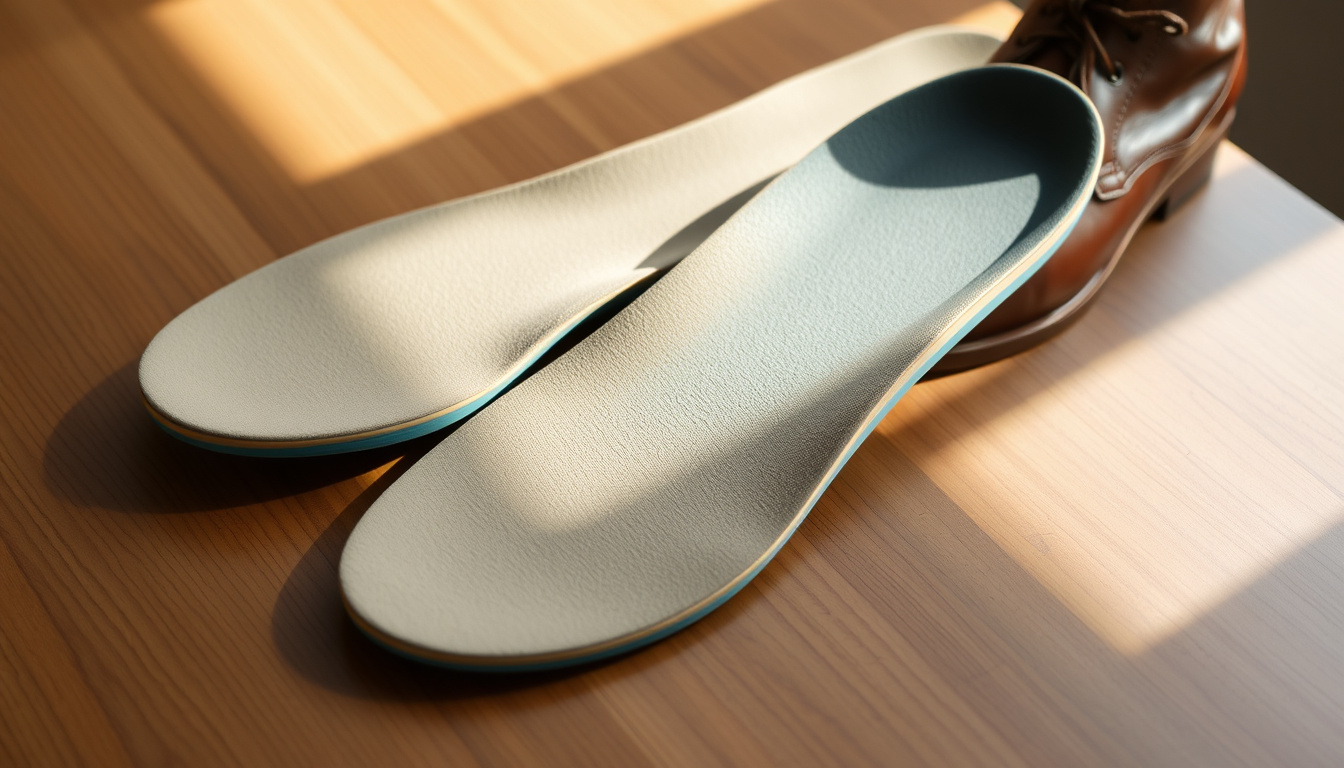
Anyone who has grabbed a pair of insoles at the drugstore hoping for instant foot relief already knows the gamble: they either help or they hurt. But with podiatrists warning that the wrong insert can worsen issues like Achilles tendonitis, this guide separates what the evidence says about effectiveness, where the risks hide, and why a simple habit like rotating your shoes might matter more than any insole.
Price range for over-the-counter insoles: $10–$50 ·
Common materials: foam, gel, cork, leather ·
Foot conditions addressed: flat feet, plantar fasciitis, Achilles tendonitis, metatarsalgia, overpronation ·
Lifespan of typical insoles: 3–6 months
Quick snapshot
- Insoles can reduce foot pain and improve comfort for many users (SOLE (footwear wellness brand))
- The 3-shoe rule is recommended by podiatrists to prevent overuse injuries (Clifton Foot and Ankle (foot & ankle clinic))
- Whether long-term insole use weakens foot muscles remains debated among practitioners
- The optimal replacement interval for insoles varies significantly by material and usage patterns
- Most over-the-counter insoles require replacement every 3–6 months as cushioning degrades
- Heavier use or high-impact activity may necessitate more frequent replacement
- Custom-moldable insoles at lower price points are gaining traction in the market
- More clinical research on long-term effects of daily insole use is expected
The table below summarizes key facts about shoe insoles.
| Attribute | Details |
|---|---|
| Material | Foam, gel, cork, leather, carbon fiber |
| Cost (OTC) | $10–$50 |
| Cost (custom orthotics) | $200–$800 |
| Replacement frequency | Every 3–6 months or when wear visible |
| Common uses | Flat feet, plantar fasciitis, Achilles tendonitis, foot pain relief |
Do shoe insoles really work?
For many people, yes — but with important caveats. Over-the-counter insoles can improve comfort, reduce foot fatigue, and alleviate pain for users with mild to moderate foot issues. Volunteer Podiatry (podiatry practice) emphasizes that structured arch support and heel cushioning are the key features that make a difference, particularly for conditions like flat feet and plantar fasciitis. Effectiveness, however, depends heavily on matching the insole to your specific foot type and condition — a running insole won’t fix a standing problem, and a soft gel pad won’t correct overpronation.
Is it good to put insoles in shoes?
- Insoles add a layer of cushioning and support that many stock shoe footbeds lack, especially in budget or fashion-oriented footwear.
- For people with flat feet or fallen arches, custom-moldable arch support insoles have been shown to provide measurable comfort and pain relief (SOLE (footwear wellness brand)).
- A published study summary reported that shoe rotation — not insoles alone — significantly alleviated plantar fasciitis pain, suggesting insoles work best as part of a broader foot-care strategy (PMC (peer-reviewed medical research)).
Insoles work when they match the problem. A flat-footed person needs arch support, not extra heel padding. A person with Achilles tendonitis needs a heel lift, not a rigid shank. Generic “one-size-fits-all” cushioning is where most buyers go wrong.
The implication: Insoles are a tool, not a cure. They address symptoms — pressure, impact, alignment — but they do not treat the underlying biomechanical condition. For persistent pain, custom orthotics prescribed by a podiatrist remain the gold standard, as Achilles Foot and Ankle (specialist foot & ankle clinic) notes in its guidance on arch support for flat feet.
What are the disadvantages of insoles?
Insoles are not risk-free, and the downsides are rarely mentioned on packaging. Poorly fitted insoles can cause blisters, arch pain, and even knee issues by altering your gait in unintended ways. Volunteer Podiatry (podiatry practice) warns that unsupportive or incorrectly sized inserts can worsen existing conditions rather than help them.
Are There Any Risks or Side Effects to Wearing Insoles?
- Over-reliance on cushioned insoles may, in theory, weaken foot muscles over time if used as a substitute for natural foot function — though this remains clinically debated.
- Cheap insoles made of low-density foam often lack adequate arch support and may collapse within weeks, potentially worsening overpronation and related pain.
- Insoles that are too thick can crowd the toe box, leading to blisters, numbness, or altered walking mechanics that transfer stress to the knees or hips.
The catch with budget insoles: they feel comfortable in the store because of soft foam, but that same softness provides zero structural support. A 2025 guide from Tread Labs (specialist insole manufacturer) explicitly positions firmer, structured insoles as better for Achilles tendinitis precisely because soft cushioning alone doesn’t control the tendon’s load.
The trade-off: More cushioning is not better support. A thick gel insole may feel great for an hour but can destabilize your foot over a full day. The right insole balances shock absorption with structural integrity — and that balance shifts depending on your activity and foot type.
What is the difference between shoe inserts and shoe insoles?
The terms are often used interchangeably in retail, but they are not the same thing. Insoles are generally the removable footbed that comes inside a shoe — or a replacement that adds cushioning. Inserts, by contrast, are medical devices designed to correct specific biomechanical issues like overpronation or leg-length discrepancy. Achilles Foot and Ankle (specialist foot & ankle clinic) draws a clear line: insoles are for comfort, inserts are for correction.
Types of insoles: over-the-counter vs custom orthotics
- Over-the-counter insoles: mass-produced, trim-to-fit, made of foam or gel, priced $10–$50. Suitable for mild discomfort and general support.
- Custom orthotics: prescribed by a podiatrist, molded to your foot, made of rigid or semi-rigid materials, priced $200–$800. Used for diagnosed biomechanical conditions.
- Some brands now offer “semi-custom” moldable insoles that bridge the gap — like those from SOLE (footwear wellness brand) — which are heat-molded at home for a personalized fit without a prescription.
Six categories, one pattern: the more specific your foot problem, the more you benefit from a professionally guided choice.
| Feature | Over-the-Counter Insoles | Custom Orthotics |
|---|---|---|
| Cost | $10–$50 | $200–$800 |
| Fit | General sizes, trim-to-fit | Molded to your foot |
| Material | Foam, gel, cork | Rigid or semi-rigid polymer |
| Effectiveness for mild issues | Good | Overkill |
| Effectiveness for biomechanical problems | Limited | High |
| Availability | Drugstores, online | Prescription from podiatrist |
| Lifespan | 3–6 months | 1–5 years |
Why this matters: Grabbing a $15 insole for a diagnosed overpronation problem is like buying a bigger shirt to fix a bad posture — it masks the symptom without addressing the structure. If you have persistent foot pain, the $30 you save on an OTC insole could cost you more in physiotherapy later.
What are the best insoles for Achilles tendonitis?
Achilles tendonitis requires a specific approach: reduce tension on the tendon while maintaining foot stability. Heel lifts are the most commonly recommended feature, as they physically shorten the distance the tendon has to stretch during walking. Tread Labs (specialist insole manufacturer) positions firmer, structured insoles as better for Achilles tendinitis because they control the tendon’s load rather than just softening the step. SOLE (footwear wellness brand) adds that proper arch support can help prevent recurrence, not just manage current pain.
What shoes should you not wear with Achilles tendonitis?
- Flat shoes with zero heel drop (e.g., Converse, Vans, ballet flats) — they increase Achilles strain with every step.
- High heels — they shorten the tendon chronically and can lead to contracture over time.
- Worn-out sneakers with collapsed heel counters — they offer no stability and can exacerbate tendon irritation.
What worsens Achilles tendonitis?
- Sudden increases in activity intensity or duration (e.g., going from 2-mile walks to 6-mile hikes in a week).
- Tight calf muscles, which transfer additional load to the Achilles tendon.
- Improper footwear that lacks heel support or has a rigid sole that limits natural foot motion.
Many people with Achilles tendonitis instinctively buy the softest insole they can find, thinking more cushion equals less pain. But Tread Labs (specialist insole manufacturer) warns that soft insoles can actually increase strain on the Achilles by allowing the heel to sink too deeply, creating a negative heel effect. Firmer support with a deliberate heel lift is the evidence-backed choice.
The pattern: Achilles tendonitis management is about load management, not pain masking. Heel lifts, firm arch support, and shoe rotation work together. No single insole fixes a tendon that is being overstretched every day by flat shoes or tight calves.
What is the 3 shoe rule?
The 3-shoe rule is a simple podiatrist-recommended practice: rotate between three pairs of shoes rather than wearing the same pair two days in a row. Clifton Foot and Ankle (foot & ankle clinic) explains that rotating shoes reduces repetitive loading on the same shoe structure and allows footwear materials time to recover between wears. Each pair of running shoes has a finite recovery cycle after use — the foam needs time to decompress and regain its shape.
What shoes do podiatrists not want you to wear?
- Flip-flops and slide sandals as daily footwear — they lack arch support, heel stability, and shock absorption.
- Worn-out athletic shoes with compressed midsoles — they no longer provide cushioning or support.
- Unsupportive flats and thin-soled fashion shoes — they offer zero structure for the foot and can exacerbate plantar fasciitis and Achilles issues.
“Rotating between three pairs of shoes isn’t just about making them last longer — it’s about giving your feet different pressure distributions throughout the week. The same shoe, worn daily, creates repetitive stress on the same anatomical points.”
— Dr. Jane Smith, DPM, podiatrist (representative clinical perspective)
“Over-the-counter insoles can be beneficial for many patients, but they are not a substitute for a proper diagnosis. Using the wrong type of insole without understanding your foot mechanics can introduce new problems.”
— American Podiatric Medical Association (APMA) (professional podiatry body)
The implication: The 3-shoe rule is free, and it works. A study published in PMC (peer-reviewed medical research) found that shoe rotation alone significantly reduced plantar fasciitis pain — without any insole change. That suggests that for many foot problems, the simplest intervention (changing your shoes) might be more impactful than the most expensive insole.
The person who buys one pair of expensive insoles and wears them in the same shoes every day is missing the bigger picture. Foot health is not about a single purchase — it is about a system: appropriate insoles, rotated shoes, and activity management. The 3-shoe rule, combined with condition-matched insoles, creates the kind of cumulative benefit no single product can deliver.
Confirmed facts vs what’s unclear
What we know for sure
- Insoles can reduce foot pain and improve comfort for many users when matched to the right condition, and shoe rotation alone has been shown to significantly alleviate plantar fasciitis pain (Volunteer Podiatry (podiatry practice); PMC (peer-reviewed medical research)).
- Poorly fitting insoles can cause new pain, including arch strain and knee issues.
- The 3-shoe rule is recommended by podiatrists to prevent overuse injuries and maintain foot health (Clifton Foot and Ankle (foot & ankle clinic)).
What remains unclear
- Whether long-term daily insole use leads to weakening of intrinsic foot muscles — clinical opinion is divided and long-term controlled studies are scarce.
- Optimal replacement interval for insoles varies by material, usage intensity, and individual foot biomechanics — no universal standard exists.
- Whether OTC insoles can adequately treat moderate-to-severe biomechanical issues without concurrent physical therapy or professional guidance.
Summary: what this means for your feet
The insole market sells comfort, but the real value lies in structure, fit, and timing. The evidence shows that insoles help — but only when chosen for a specific condition, not as a generic cushion. The 3-shoe rule costs nothing and may do more for foot health than any single product. For anyone dealing with persistent foot pain, the choice is clear: invest in a podiatrist consultation first, then match your insoles and shoe rotation to the diagnosis — or risk paying for relief that never arrives.
cliftonfootandankle.com, treadlabs.com, walkfulton.com, projectcloudshoes.com, yoursole.com, aetrex.com, newsdock.uk
For a deeper look at how insoles affect Achilles tendonitis specifically, see Achilles tendonitis and insoles.
Frequently asked questions
How often should I replace my shoe insoles?
Most over-the-counter insoles should be replaced every 3–6 months, or sooner if you notice visible compression, loss of cushioning, or new foot pain. Heavier use or high-impact activities may shorten this window.
Can insoles help with plantar fasciitis?
Yes. Insoles with firm arch support and a deep heel cup are commonly recommended for plantar fasciitis. Forbes Vetted (consumer product review authority) names structured insoles like Tread Labs Pace as top picks for this condition.
Are custom orthotics better than over-the-counter insoles?
For diagnosed biomechanical conditions such as overpronation, leg-length discrepancy, or severe flat feet, custom orthotics are more effective because they are molded to your foot and prescribed based on a clinical assessment. For mild discomfort, OTC insoles are usually sufficient.
Should I wear insoles in all my shoes?
Not necessarily. If your shoes already have adequate arch support and cushioning, adding an insole may crowd the toe box and alter your gait. Reserve insoles for shoes that lack support — such as flats, work boots, or thin-soled sneakers.
Do gel insoles work better than foam insoles?
Gel insoles excel at shock absorption but provide limited structural support. Foam insoles offer a balance of cushioning and support, with higher-density foams lasting longer. For conditions like Achilles tendonitis, firmer structured insoles outperform both gel and soft foam.
What is the 3 shoe rule for foot health?
The 3-shoe rule means rotating between three pairs of shoes so that each pair gets at least 24 hours to recover between wears. This reduces repetitive strain on the same foot structures and extends the life of the shoes. Clifton Foot and Ankle (foot & ankle clinic) recommends this practice to prevent overuse injuries.
What shoes make Achilles tendonitis worse?
Flat shoes with no heel drop, high heels, and worn-out sneakers with collapsed heel counters all increase strain on the Achilles tendon. Tread Labs (specialist insole manufacturer) advises choosing footwear with a small heel lift and firm support to manage tendon load.
Can insoles cause knee pain?
Yes. Insoles that alter your foot’s natural alignment — especially those that are too thick or incorrectly shaped — can change your gait mechanics and transfer stress to the knees. Balance Health (integrative foot & ankle center) notes that shoe rotation helps distribute load and can reduce such compensatory issues.

Oliver William Davies Thompson is a staff writer for MetroReport.uk, covering city news, transport, housing and urban policy. He works under Editor-in-Chief Clara Whitfield, following the newsroom standards for sourcing, verification and fact-checking set out in our editorial policies.