RC Celta de Vigo stands as one of Galicia’s most storied football institutions, representing the city of Vigo since 1923. Known affectionately as Os Celestes (The Sky Blues), the club embodies the Celtic heritage and maritime spirit of northwestern Spain through nearly a century of top-flight competition.
Founded through the merger of Real Vigo Sporting and Real Fortuna Football Club, RC Celta de Vigo has navigated the heights of Spanish football from the historic Balaídos stadium. The club’s journey encompasses early 20th-century formation, Civil War interruptions, and notable European campaigns in the modern era.
This examination covers the organization’s origins, home ground, competitive status, and historical achievements, while acknowledging specific gaps regarding current-season personnel and performance data.
What is RC Celta de Vigo?
The following characteristics define this Galician sporting institution:
- Formed from the merger of Real Vigo Sporting and Real Fortuna Football Club under leaders Manuel de Castro “Handicap” and Juan Baliño Ledo
- Maintains sky blue home kits and white shorts, originally adopting red and black before switching to colors inspired by the Galician flag
- First achieved promotion to Spain’s top division during the 1935/36 season
- Reached the UEFA Cup semi-finals in 2001 and qualified for the Champions League group stage in 2002/03
- Contests the heated Galician derby against Deportivo La Coruña
- Temporarily lost the “Real” title during the Second Republic (1931–1936) before restoration
- Operates from the city-owned Estadio de Balaídos, acquired in 1945
| Fact Category | Details |
|---|---|
| Full Name | Real Club Celta de Vigo |
| Location | Vigo, Galicia, Spain |
| Founded Date | 23 August 1923 |
| Home Stadium | Estadio de Balaídos (inaugurated 30 December 1928) |
| Stadium Capacity | 31,800–32,500 spectators |
| Field Dimensions | 105m × 69m |
| Kit Colors | Sky blue and white (originally red and black) |
| First Top-Flight Season | 1935/36 (Second Division champions) |
| Notable Achievement | Copa del Rey runners-up (1948) |
Where is RC Celta de Vigo’s Stadium and Location?
The club anchors the coastal city of Vigo, the largest urban center in the autonomous community of Galicia in northwestern Spain. This maritime location influences both the club’s identity and its supporter culture.
The Balaídos Ground
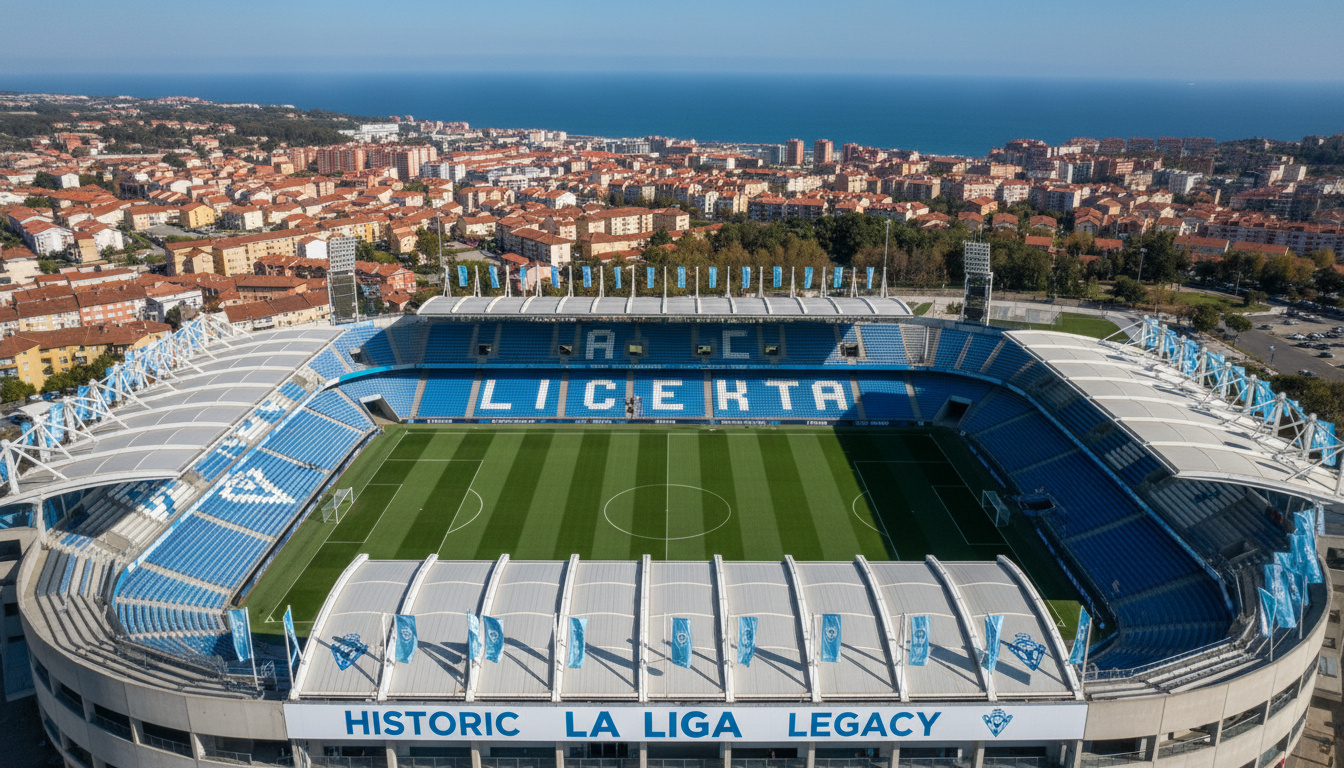
Estadio de Balaídos has served as the club’s home since its inauguration on 30 December 1928, when RC Celta de Vigo defeated Real Unión de Irún 7-0. The venue originally replaced the Coia grounds, which the club vacated due to tramway expansion in the city.
The stadium accommodates between 31,800 and 32,500 spectators across stands that have witnessed nearly a century of football history. The pitch measures 105 meters by 69 meters. Municipal authorities acquired the facility for the club in 1945, solidifying its status as a permanent home for the sky blues.
Unlike many modern clubs that own their grounds outright, Balaídos remains city property acquired by municipal authorities in 1945, with RC Celta de Vigo serving as the primary tenant.
Regional Context
Vigo sits within the Pontevedra province, serving as an industrial and cultural hub for the Rías Baixas region. The club represents this distinct Galician identity throughout Spanish and European competition.
What League Does RC Celta de Vigo Play In?
RC Celta de Vigo competes in La Liga, the uppermost tier of the Spanish football league system. The club has maintained consistent top-flight status since securing promotion in 2012, having previously experienced periods in the second division throughout its history.
Historical League Performance
The club first reached La Liga (then called the First Division) by winning the Second Division title in 1935/36. Following the Spanish Civil War, they returned to the top flight in 1939, with Nolete scoring the club’s inaugural first-division goal.
High-water marks include the UEFA Cup semi-final appearance in 2001 and Champions League qualification for the 2002/03 campaign. During that European run, the squad featured notable talents including Mazinho, Haim Revivo, Alexander Mostovoi, Valery Karpin, José Manuel Pinto, and Claude Makélélé.
Current Personnel Uncertainties
Specific details regarding the 2025/26 squad composition, current managerial appointments, and exact football standings remain unavailable in accessible records. The club’s competitive position and technical staff leadership continue to evolve through transfer windows and seasonal cycles.
Comprehensive verified information regarding the current 2025/26 squad list, manager identity, and recent fixture results remains unconfirmed in available sources as of March 2026.
RC Celta de Vigo Recent Results, Fixtures, and Rivalries
The club’s competitive landscape centers on historic regional antagonisms and intermittent European campaigns rather than sustained domestic silverware dominance.
The Galician Derby
Primary rivals are Deportivo de La Coruña, with the two clubs contesting the Galician derby (Derbi gallego). This fixture carries significant regional weight, rooted in competition between the cities of Vigo and A Coruña for prominence within Galicia.
Copa del Rey and European History
The club reached its first Copa del Rey final in 1948, falling 4-1 to Sevilla at Chamartín. Despite financial difficulties and relegations throughout its history, the organization has demonstrated resilience in returning to top-tier competition.
The 2001 UEFA Cup semi-final run and subsequent 2002/03 Champions League qualification represent the pinnacle of the club’s continental achievement, featuring international stars who elevated the team’s profile beyond Galicia.
How Has RC Celta de Vigo Evolved Through the Decades?
- 1923: Formation through merger of Real Vigo Sporting and Real Fortuna Football Club on 23 August, adopting the name Real Club Celta de Vigo in reference to Galicia’s Celtic heritage.
- 1928: Inauguration of Estadio de Balaídos on 30 December, marking a permanent home after leaving Coia.
- 1931–1936: Removal of the “Real” title during the Second Republic, with the club operating simply as Club Celta.
- 1935/36: First promotion to La Liga (First Division) as Second Division champions.
- 1939: Post-Civil War return to the top division, with Nolete scoring the club’s first-ever La Liga goal.
- 1945: Municipal acquisition of Balaídos stadium, securing the club’s long-term home.
- 1948: First Copa del Rey final appearance, losing 4-1 to Sevilla at Chamartín.
- 2001: UEFA Cup semi-finalists, marking the club’s deepest run in European competition.
- 2002/03: Champions League group stage qualification, featuring players such as Claude Makélélé and Valery Karpin.
- 2023/24: Celebration of the centenary season, marking 100 years since the club’s foundation.
What Information is Definitively Established?
| Established Facts | Uncertain or Unconfirmed Details |
|---|---|
| Founded 23 August 1923 in Vigo, Galicia | Current 2025/26 squad composition and player contracts |
| Home ground: Estadio de Balaídos (capacity ~32,000) | Identity of current manager/head coach as of March 2026 |
| Competes in La Liga (top Spanish division) | Precise current league position and points tally |
| Nickname: Os Celestes (The Sky Blues) | Upcoming fixture schedule and recent match results |
| Primary rival: Deportivo La Coruña | Specific transfer window acquisitions for 2025/26 |
| Reached UEFA Cup semi-finals (2001) and Champions League (2002/03) | Financial figures and ownership structure details |
What is the Cultural Significance of the Club?
The name “Celta” explicitly references the Celtic heritage of Galicia, a region with distinct linguistic and cultural traditions within Spain. The club’s sky blue colors mirror the Galician flag, reinforcing its role as a standard-bearer for regional identity.
Known alternatively as O Celtiña (Lovely or Little Celta), the organization maintains deep roots in working-class Vigo neighborhoods. The supporter base reflects the city’s maritime character, with generations of dockworkers and industrial laborers forming the core of the fan community.
The club’s resilience through financial crises and relegation battles mirrors the industrial history of Vigo itself, creating a symbiotic relationship between the team’s fortunes and the city’s self-image.
Sources and Attribution
Historical claims regarding foundation dates, stadium specifications, and competitive achievements derive from the club’s official historical archives and regional sporting records. Primary documentation confirms the 1923 merger and subsequent administrative developments, including the temporary removal of the “Real” distinction during the 1931–1936 period.
Stadium capacity figures and dimensional specifications originate from municipal records and sporting infrastructure documentation. European competition dates and player rosters from the early 2000s era remain accessible through archived sporting histories.
Key Takeaways
RC Celta de Vigo represents a century of Galician football tradition, from its 1923 founding through Balaídos stadium’s nearly 100-year history. While the club’s form guide and current squad details remain subject to seasonal fluctuation, its established place in La Liga and historic achievements—including European semi-finals and the heated rivalry with Deportivo La Coruña—cement its status as a significant institution in Spanish football.
Frequently Asked Questions
What do the club colors represent?
The sky blue and white kit reflects the colors of the Galician flag, adopted after initially wearing red and black. This choice emphasizes regional identity over the club’s earliest aesthetic.
Has RC Celta de Vigo ever won La Liga?
No. The club first reached Spain’s top division in 1936 but has never won the championship. Their best domestic result remains the 1948 Copa del Rey final appearance.
What is the origin of the name “Celta”?
The name derives from the Celtic heritage of Galicia (Celtia in Spanish), distinguishing the region’s ancient cultural roots from other parts of Spain.
When did the club first qualify for the Champions League?
RC Celta de Vigo qualified for the Champions League group stage during the 2002/03 season, following a squad featuring Claude Makélélé and Alexander Mostovoi.
Why is the derby with Deportivo La Coruña significant?
The fixture represents competition between Galicia’s two largest cities, Vigo and A Coruña, carrying implications for regional pride beyond standard league points.
What happened to the club during the Spanish Second Republic?
Between 1931 and 1936, the club removed the “Real” title granted by King Alfonso XIII, operating as Club Celta until the monarchy’s restoration allowed the return of the full name.

Oliver William Davies Thompson is a staff writer for MetroReport.uk, covering city news, transport, housing and urban policy. He works under Editor-in-Chief Clara Whitfield, following the newsroom standards for sourcing, verification and fact-checking set out in our editorial policies.