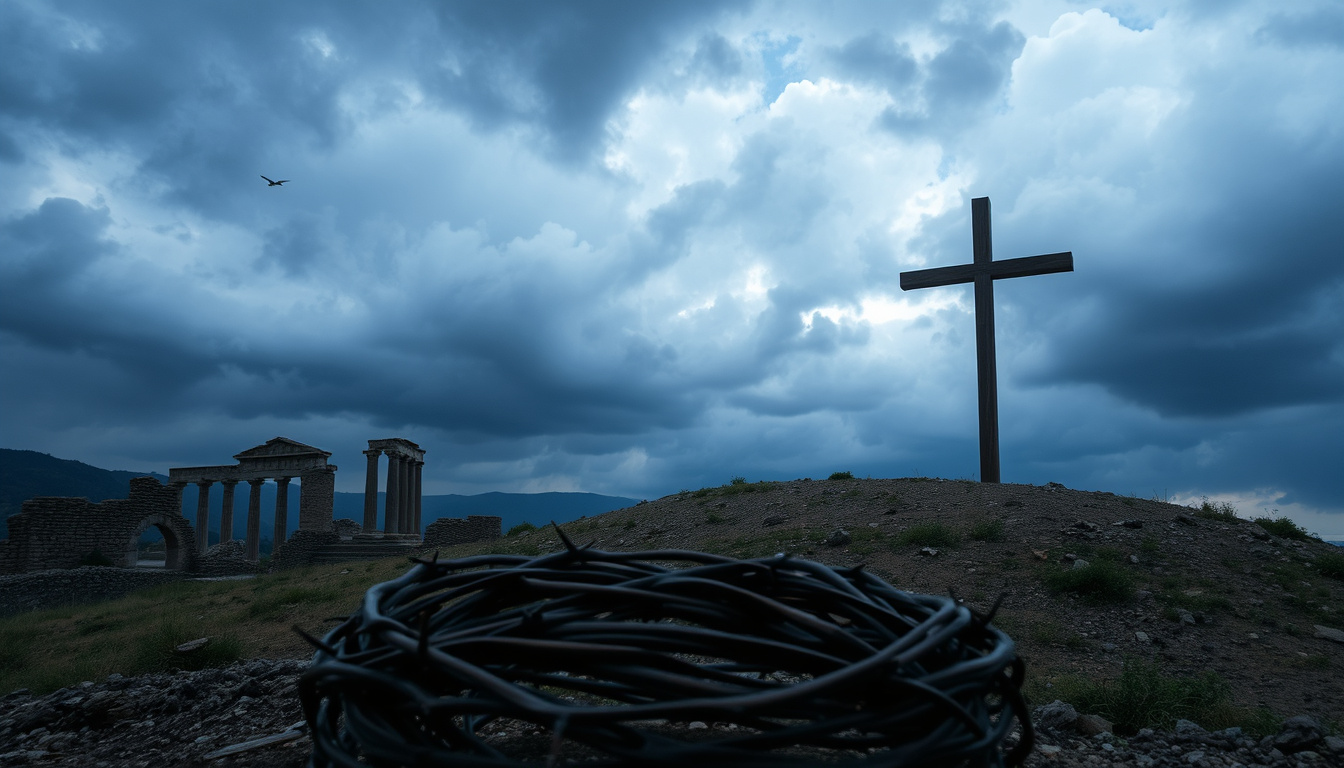
Few films have sparked as much debate, devotion, and discomfort as The Passion of the Christ—beloved by many Christians as a profound depiction of Jesus’ final hours, yet criticized by scholars and Jewish leaders for its portrayal of events. This guide separates fact from fiction across the film’s historical accuracy, controversy, and the ongoing sequel story.
Release year: 2004 · Director: Mel Gibson · Worldwide box office: over $612 million · Budget: $30 million · Languages: Aramaic, Latin, Hebrew
Quick snapshot
- Released February 25, 2004 (EBSCO Research Starters)
- Shot in Aramaic, Latin, Hebrew (EBSCO Research Starters) (EBSCO Research Starters)
- Grossed over $612 million worldwide on a $30 million budget (EBSCO Research Starters) (EBSCO Research Starters)
- Whether the film accurately portrays 1st‑century Jerusalem is debated (ScreenRant)
- The extent of Mel Gibson’s personal views influencing content is disputed (Wikipedia)
- The authenticity of Pope John Paul II’s alleged endorsement is uncertain (Wikipedia) (ScreenRant)
- Sequel The Passion of the Christ: Resurrection in development (Wikipedia)
- Jim Caviezel confirmed to reprise role (Wikipedia)
- Available on DVD, Blu‑ray, and digital platforms (Wikipedia)
Seven key data points, one takeaway: The Passion of the Christ was a low‑budget phenomenon that shattered box‑office records while dividing critics and audiences.
Here are the key statistics about The Passion of the Christ at a glance.
| Label | Value |
|---|---|
| Release date | February 25, 2004 |
| Box office (worldwide) | $612 million |
| Budget | $30 million |
| Languages | Aramaic, Latin, Hebrew |
| MPAA rating | R for graphic violence |
| Rotten Tomatoes (Tomatometer) | 49% |
| IMDb rating | 7.2/10 |
Why was the Passion of Christ controversial?
Accusations of antisemitism from Jewish groups and scholars
Jewish leaders, including the Anti‑Defamation League, criticized the film for depicting the Jewish priests and crowd as bloodthirsty, arguing it could fuel antisemitism (ScreenRant). The ADL’s Abraham Foxman said the film “could have dangerous consequences.” In contrast, some scholars at the University of Arizona’s Bible Interpretation project argued that the accusations have been overstated, noting that the film’s reliance on the New Testament makes some anti‑Judaism concerns difficult to avoid (Bible Interpretation / University of Arizona). The pattern: the controversy reflects an old debate about how to portray the Passion narrative without blaming Jews collectively.
Graphic violence and its impact on viewers and critics
The R‑rated film is built around “sequences of graphic violence” (EBSCO Research Starters). Critics called the relentless flogging and crucifixion “exploitative and voyeuristic” (ScreenRant). Supporters, including Billy Graham, praised the film for making Christ’s suffering visceral. The catch: the same brutality that makes the film emotionally overwhelming for many viewers also drives its reputation as a spiritual exercise.
Debates over historical and theological accuracy
Historians confirm Roman crucifixion was as brutal as shown, but some scenes—like Jesus inventing the dining‑room table—are artistic license (ScreenRant). The film’s theological lens is heavily influenced by Gibson’s traditionalist Catholic perspective and the visions of Anne Catherine Emmerich, a 19th‑century mystic. This mix of Gospel source and extra‑biblical material fuels ongoing scholarly dispute.
For viewers deciding whether to watch, the controversy isn’t abstract—it shapes how the film is discussed in churches, schools, and online. The trade‑off: a deeply moving religious experience for some versus a trigger for interfaith tension for others.
The controversy around the film remains a subject of debate among religious and cultural commentators.
How historically accurate is Passion of the Christ?
Sources used: the Gospels, Anne Catherine Emmerich’s visions, traditional Catholic Stations of the Cross
The film draws primarily from the four Gospel accounts, but also takes inspiration from Emmerich’s writings (a source for extra‑biblical details like the crow pecking at a thief’s eye). Mel Gibson incorporated the Stations of the Cross, a Catholic devotional practice, to structure the narrative.
Depictions of Roman crucifixion methods and Jewish legal procedures in 1st century Jerusalem
Roman crucifixion was indeed as savage as depicted—scourging, public display, and prolonged death. However, historians note that the Sanhedrin likely did not have the legal authority to demand execution under Roman occupation (Bible Interpretation / University of Arizona). The film shows Jesus speaking fluent Latin, a detail ScreenRant calls “historically unlikely” (ScreenRant).
Scholarly critiques and endorsements
Some historians defend the film’s overall brutality as accurate, while others point out anachronisms. The bottom line: The Passion of the Christ is not a documentary—it’s a theological interpretation that prioritizes emotional impact over historical precision.
Is Mel Gibson doing a sequel to The Passion of the Christ?
Announcement and timeline for ‘The Passion of the Christ: Resurrection’
In 2016, Mel Gibson publicly announced a sequel, tentatively titled The Passion of the Christ: Resurrection. By 2024, Gibson confirmed the script was complete and pre‑production expected to begin in 2025 (Wikipedia).
Mel Gibson’s role as director and co-writer
Gibson will co‑write and direct the sequel, continuing his personal investment in the project.
Jim Caviezel’s involvement and the question of his return
Jim Caviezel confirmed in 2020 interviews that he was approached to reprise the role of Jesus and agreed to do so (Wikipedia). Rumors that he was excluded are false; the delay is due to script development and Gibson’s schedule.
For fans waiting over two decades, the sequel is real—but still in early stages. The key question: will it recapture the cultural firestorm of the original, or will it be a quieter release?
The sequel’s development timeline reflects Gibson’s commitment to the project despite delays.
Is The Passion of the Christ hard to watch?
MPAA rating and content warnings (extreme graphic violence, flogging, crucifixion)
The film is rated R for “sequences of graphic violence” (EBSCO Research Starters). It shows the flogging in excruciating detail, and the crucifixion sequence is prolonged and bloody.
Audience and critic reviews on Rotten Tomatoes and IMDb
Rotten Tomatoes gives it 49% from critics but an 82% audience score. IMDb users rank it 7.2/10. The gap reveals the divide: critics often cite the violence as overwhelming, while audiences rate it highly for spiritual impact.
Viewer advisories for sensitive individuals
Many viewer guides recommend the film only for mature audiences not easily triggered by gore. The violence is central to Gibson’s stated intention: to make viewers feel the weight of Christ’s suffering.
Where can I watch The Passion of the Christ?
Streaming services: Netflix, Amazon Prime, Apple TV
As of early 2025, the film is streaming on Netflix in many countries, including the United States (Wikipedia). It is also available for rent or purchase on Amazon Prime Video, Apple TV, YouTube, and Google Play.
Digital purchase and rental options (Amazon, YouTube, Google Play)
Digital copies cost around $4–$15 depending on platform and resolution. Physical media (DVD, Blu‑ray) remains widely available.
DVD and Blu-ray availability
Many retailers and online marketplaces still carry the film on disc, often with extended features.
Upsides
- Profound spiritual impact for Christian viewers
- Record‑breaking box office success validates its reach
- Authentic use of Aramaic, Latin, Hebrew adds solemnity
- Mel Gibson’s personal investment resulted in a visually striking film
Downsides
- Graphic violence may be unwatchable for sensitive viewers
- Accusations of antisemitism persist and affect its cultural standing
- Historical inaccuracies mislead casual viewers
- Mel Gibson’s personal controversies color the film’s reception
Timeline
- 2003 – Filming in Italy (Wikipedia)
- February 25, 2004 – Theatrical release in the United States (EBSCO Research Starters)
- 2004–2005 – Box‑office dominance and ongoing controversy (Wikipedia)
- 2016 – Mel Gibson announces sequel plan (Wikipedia)
- 2020 – Jim Caviezel confirms he will return for the sequel (Wikipedia)
- 2024 – Script complete; pre‑production scheduled for 2025 (Wikipedia)
Clarity: what we know and what we don’t
Confirmed facts
- Jim Caviezel played Jesus in the 2004 film.
- Mel Gibson directed and co‑financed the film.
- The film grossed over $612 million worldwide on a $30 million budget (EBSCO Research Starters).
- A sequel titled The Passion of the Christ: Resurrection is in development (Wikipedia).
- The film is available on Netflix (as of 2025) (Wikipedia).
What’s unclear
- Exact production start date for the sequel has not been publicly announced.
- Whether all original cast members will return is not fully confirmed.
- The extent of Mel Gibson’s personal views influencing the film’s content is debated (Wikipedia).
Quotes from key voices
“The film could have dangerous consequences.”
— Abraham Foxman, then National Director of the Anti‑Defamation League (as reported by ScreenRant)
“I’m going to do it… I’ve been asked to come back.”
— Jim Caviezel on reprising his role in the sequel, 2020 interview (cited by Wikipedia)
The two perspectives—one warning of harm, the other embracing the sequel—underscore the film’s lasting ability to polarize.
Summary
The Passion of the Christ remains a uniquely potent artifact: a low‑budget independent film that became a global phenomenon, a religious touchstone that sparked inter‑religious controversy, and a project with unfinished business. For Christians seeking a stark meditation on their faith, the film offers an unmatched experience. For viewers sensitive to graphic imagery or concerned about its treatment of Jewish figures, the warnings are real. The takeaway: this is not a neutral film, and its legacy is still being written—especially with Resurrection on the horizon. For those in the target audience weighing whether to watch or re‑watch, the decision hinges on one question: are you ready for the full, unfiltered Passion?
For a deeper look at the controversy and historical accuracy, the article also examines the film’s biblical fidelity and the debates it continues to spark.
Frequently asked questions
How much did The Passion of the Christ cost to produce?
$30 million (EBSCO Research Starters).
What is the MPAA rating and why?
Rated R for “sequences of graphic violence” (EBSCO Research Starters).
Who played Mary in The Passion of the Christ?
Maia Morgenstern portrayed Mary.
Did Mel Gibson invest his own money in the film?
Yes, Gibson co‑financed the film, contributing a significant portion of the $30 million budget.
How long is The Passion of the Christ?
2 hours and 7 minutes (theatrical cut).
Is The Passion of the Christ based on the Bible?
Primarily on the four Gospels, with additional material from Anne Catherine Emmerich’s visions.
Who wrote the screenplay for The Passion of the Christ?
Mel Gibson wrote the screenplay, with contributions from Benedict Fitzgerald.
What is the meaning of the title ‘Passion of the Christ’?
“Passion” refers to the suffering of Jesus in the final hours leading up to and including his crucifixion.
Related reading

Oliver William Davies Thompson is a staff writer for MetroReport.uk, covering city news, transport, housing and urban policy. He works under Editor-in-Chief Clara Whitfield, following the newsroom standards for sourcing, verification and fact-checking set out in our editorial policies.