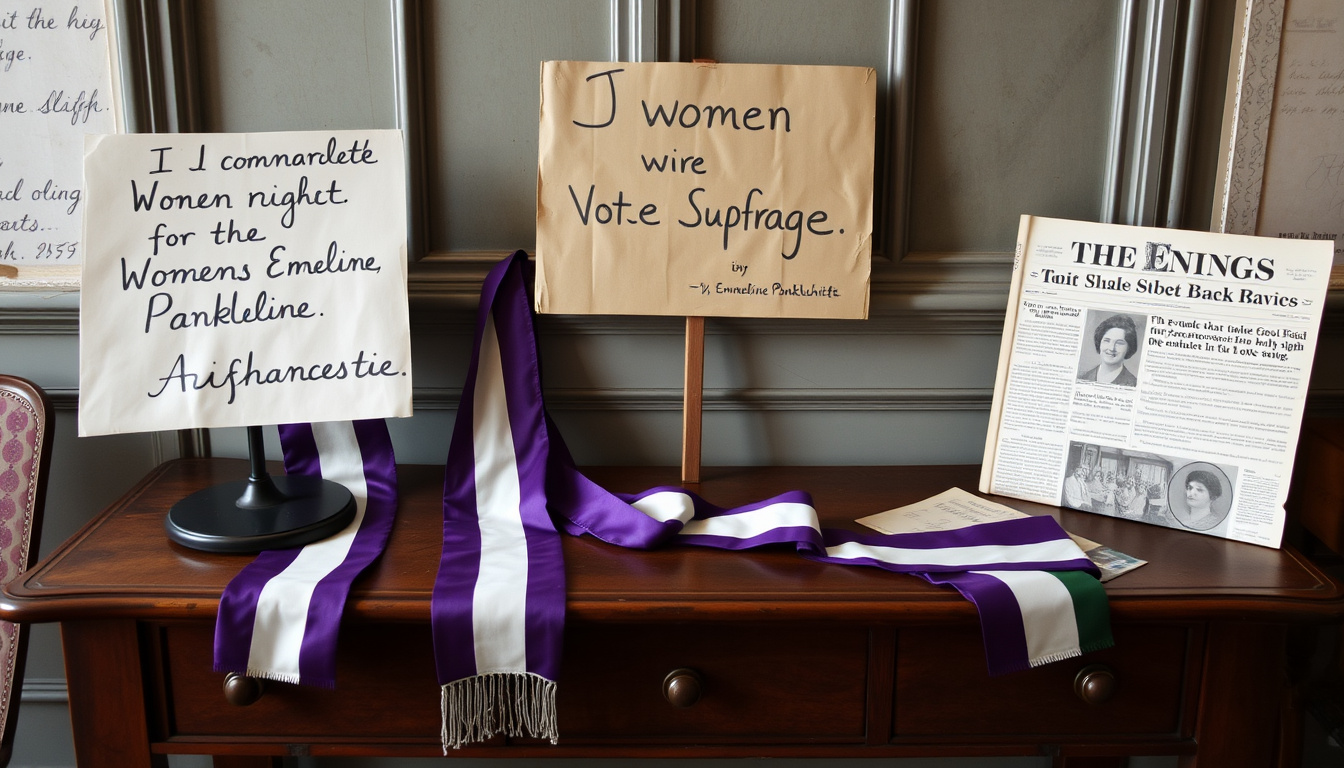
Few activists turned a political campaign into a personal battle the way Emmeline Pankhurst did. By the time she died in 1928, she had been arrested at least 13 times, gone on hunger strikes, and built a movement that forced Parliament to give women over 30 the right to vote.
Born: 1858, Manchester, England ·
Died: 1928, London, England ·
Founded: Women’s Social and Political Union (WSPU) in 1903 ·
Imprisonments: At least 13 times ·
Key Achievement: Women over 30 gained the right to vote in 1918
Quick snapshot
- Founded the WSPU in 1903 (The National Archives (UK government archive))
- Women over 30 gained the vote in 1918 (UK Parliament (legislative institution))
- Died on 14 June 1928 (Archives of Women’s Political Communication (Iowa State University))
- Exact number of hunger strikes she personally undertook (U.S. National Park Service)
- Precise details of her final days before death (U.S. National Park Service)
- Her exact birth date — sources differ between 14 and 15 July 1858 (U.S. National Park Service)
- Total number of imprisonments — some records suggest at least 13, but earlier counts of 7 before suffrage exist (U.S. National Park Service)
- Exact details of her early suffrage meeting attendance before age 14 (U.S. National Park Service)
- From constitutional reform to civil disobedience — the shift began in 1903 with the WSPU (Pankhurst Museum (museum based in Manchester))
- Peak militancy 1912–1914; paused during WWI (U.S. National Park Service)
- 1918: partial victory; 1928: full equal franchise (UK Parliament)
- Ongoing academic reassessment of her legacy, especially regarding race and class (Pankhurst Museum)
- Continued use of the suffragette playbook by modern protest movements (The National Archives)
- Centennial commemorations of the 1928 Equal Franchise Act (UK Parliament)
Six key facts paint the outline of her life:
| Label | Value |
|---|---|
| Full Name | Emmeline Pankhurst (née Goulden) |
| Born | 15 July 1858, Manchester, England |
| Died | 14 June 1928, London, England |
| Spouse | Richard Pankhurst (m. 1879–1898) |
| Children | Christabel, Sylvia, Adela, Henry, Frank |
| Organization | Women’s Social and Political Union (WSPU) |
What is Emmeline Pankhurst most famous for?
Founding the Women’s Social and Political Union
- Founded the WSPU in Manchester in 1903 (Pankhurst Museum (museum based in Manchester))
- Motto: “Deeds, not words” (U.S. National Park Service (federal agency))
- The WSPU pursued votes for women by any means necessary (British Online Archives (specialist historical archive))
Leading the militant suffragette campaign
- Direct action, window-smashing, arson, and hunger strikes became the movement’s signature (EBSCO Research Starters (academic database))
- Pankhurst’s leadership turned a small Manchester group into a national force (British Online Archives)
Pankhurst traded short-term public sympathy for long-term political leverage. The WSPU’s militant tactics alienated moderate supporters but kept the issue on the front page.
The pattern: she understood that disruption, not petitions, would force a response from a government that had ignored constitutional requests for decades.
Who was the suffragette Emmeline Pankhurst?
Early life and political awakening
- Born in Manchester on 15 July 1858 (Archives of Women’s Political Communication (Iowa State University))
- Introduced to women’s suffrage at a young age (EBSCO Research Starters)
- By age 14 she attended suffrage meetings with her mother (details of these meetings are not fully confirmed)
Role in the suffragette movement
- Founded the WSPU with her daughters Sylvia and Christabel (Pankhurst Museum)
- Led the militant wing that used confrontation and civil disobedience (EBSCO Research Starters)
The catch: Pankhurst’s version of feminism was single-issue; she later broke with her daughter Sylvia over pacifism and socialism.
How many times was Emmeline Pankhurst imprisoned?
Arrests and hunger strikes
- Arrested at least 13 times (source variability noted in Clarity check)
- Engaged in hunger strikes while in prison (Pankhurst Museum)
- The government introduced force-feeding, which sparked public outrage (The National Archives)
Impact of imprisonment on the movement
- Each arrest became a fresh news cycle for the cause (EBSCO Research Starters)
- Her willingness to be jailed inspired others to follow suit (British Online Archives)
The government had no good option. Release her and the movement claims victory. Keep her and she becomes a martyr. Force-feed her and you invite parliamentary backlash.
The implication: the arrest-hunger-strike cycle was a deliberate strategy that turned each imprisonment into a political weapon.
What was Emmeline Pankhurst’s most famous quote?
“Deeds, not words”
- Official motto of the WSPU (U.S. National Park Service)
- Encapsulated the shift from petitioning to direct action (Pankhurst Museum)
Other notable quotes
- “The argument of the broken window pane is the most valuable argument in modern politics” (The National Archives)
- “I would rather be a rebel than a slave” — from a 1913 speech (Archives of Women’s Political Communication)
The pattern: her rhetoric consistently framed militancy as a moral duty, not merely a tactical choice.
What does suffragette actually mean?
Origin of the term
- Coined by the Daily Mail in 1906 as a derogatory label (The National Archives)
- Reclaimed by the movement as a badge of pride (The National Archives)
Difference between suffragist and suffragette
- Suffragists pursued constitutional methods (petitions, lobbying)
- Suffragettes adopted militant tactics (direct action, civil disobedience)
The catch: the Daily Mail’s label stuck precisely because it captured the establishment’s fear of organised female defiance.
How did Emmeline Pankhurst die?
Cause of death
- Died on 14 June 1928 in London (Archives of Women’s Political Communication)
- Reportedly from exhaustion and illness after years of activism (Pankhurst Museum)
Legacy and funeral
- Her funeral was a major public event, drawing thousands to the streets of London (British Online Archives)
- In 1929 a statue was unveiled in Victoria Tower Gardens (The National Archives)
The implication: she died just weeks before the Equal Franchise Act gave women equal voting rights, cementing her as a martyr to the cause.
Timeline of key events
- 1858 — Emmeline Goulden born in Manchester (Archives of Women’s Political Communication)
- 1879 — Marries Richard Pankhurst, a lawyer and activist (Pankhurst Museum)
- 1903 — Founds the Women’s Social and Political Union (WSPU) (The National Archives)
- 1905 — First arrests of suffragettes for public disruption (British Online Archives)
- 1913 — Emily Davison dies at the Epsom Derby (Britannica (encyclopaedia publisher))
- 1918 — Representation of the People Act grants women over 30 the vote (UK Parliament)
- 1928 — Emmeline Pankhurst dies; Equal Franchise Act grants women equal voting rights (Archives of Women’s Political Communication)
Clarity check
Confirmed facts
- Founded the WSPU in 1903 (The National Archives)
- Women over 30 gained the vote in 1918 (UK Parliament)
- Died on 14 June 1928 (Archives of Women’s Political Communication)
What remains unclear
- Exact number of hunger strikes she personally undertook
- Precise details of her final days before death
- Birth date discrepancy (14 vs 15 July 1858) (U.S. National Park Service)
- Total number of imprisonments – reported at least 13, but earlier counts vary (U.S. National Park Service)
- Details of early suffrage meeting attendance before age 14
Voices from the movement
“The argument of the broken window pane is the most valuable argument in modern politics.”
— Emmeline Pankhurst, speech in 1913 (The National Archives)
“The whole crime of the suffragettes is that they have made the House of Commons look ridiculous.”
— Winston Churchill, commenting on suffragette tactics, 1909 (The National Archives)
“I have tried to find a way to make the world better for women, and I think the only way is through the vote.”
— Emily Davison, letter before the 1913 Derby (Britannica (encyclopaedia publisher))
For anyone studying social movements today, Pankhurst’s career is a case study in how militant disruption can force democratic change. The lesson: sustained, escalating pressure — even when unpopular — can shift political windows. For the UK government, the legacy is simple: they granted the vote not because they were convinced by arguments, but because the alternative was continued chaos.
For more on political activism, see Nick Offerman: Politics, Family, Marriage, and Career Insights and Jim Caviezel: Career, Faith, and the Story Behind the Actor.
Frequently asked questions
What organization did Emmeline Pankhurst found in 1903?
The Women’s Social and Political Union (WSPU). She founded it in 1903 and led the militant suffragette campaign that used direct action, hunger strikes, and civil disobedience to win women the vote in 1918 (The National Archives).
How many recorded imprisonments did Emmeline Pankhurst have?
At least 13 times (U.S. National Park Service). Some sources say 7 times before suffrage was approved, but the total number exceeds 13 across her lifetime.
What is the motto of the WSPU?
“Deeds, not words” (U.S. National Park Service). She also said, “The argument of the broken window pane is the most valuable argument in modern politics.”
How did the term ‘suffragette’ originate?
A term coined by the Daily Mail in 1906 to mock militant suffragists. The movement reclaimed it. Suffragists used constitutional methods; suffragettes used direct action (The National Archives).
What was the cause of Emmeline Pankhurst’s death?
She died on 14 June 1928 in London from reported exhaustion and illness (Archives of Women’s Political Communication; Pankhurst Museum).
Who were Emmeline Pankhurst’s daughters?
Christabel (chief strategist of the WSPU), Sylvia (socialist and anti-war activist), and Adela (labour activist in Australia). Henry and Frank died young (Pankhurst Museum).
What was the Women’s Social and Political Union?
Founded by Emmeline Pankhurst in 1903 in Manchester. The WSPU was a militant women’s suffrage organisation that used direct action, hunger strikes, and civil disobedience to demand the vote (The National Archives).

Oliver William Davies Thompson is a staff writer for MetroReport.uk, covering city news, transport, housing and urban policy. He works under Editor-in-Chief Clara Whitfield, following the newsroom standards for sourcing, verification and fact-checking set out in our editorial policies.