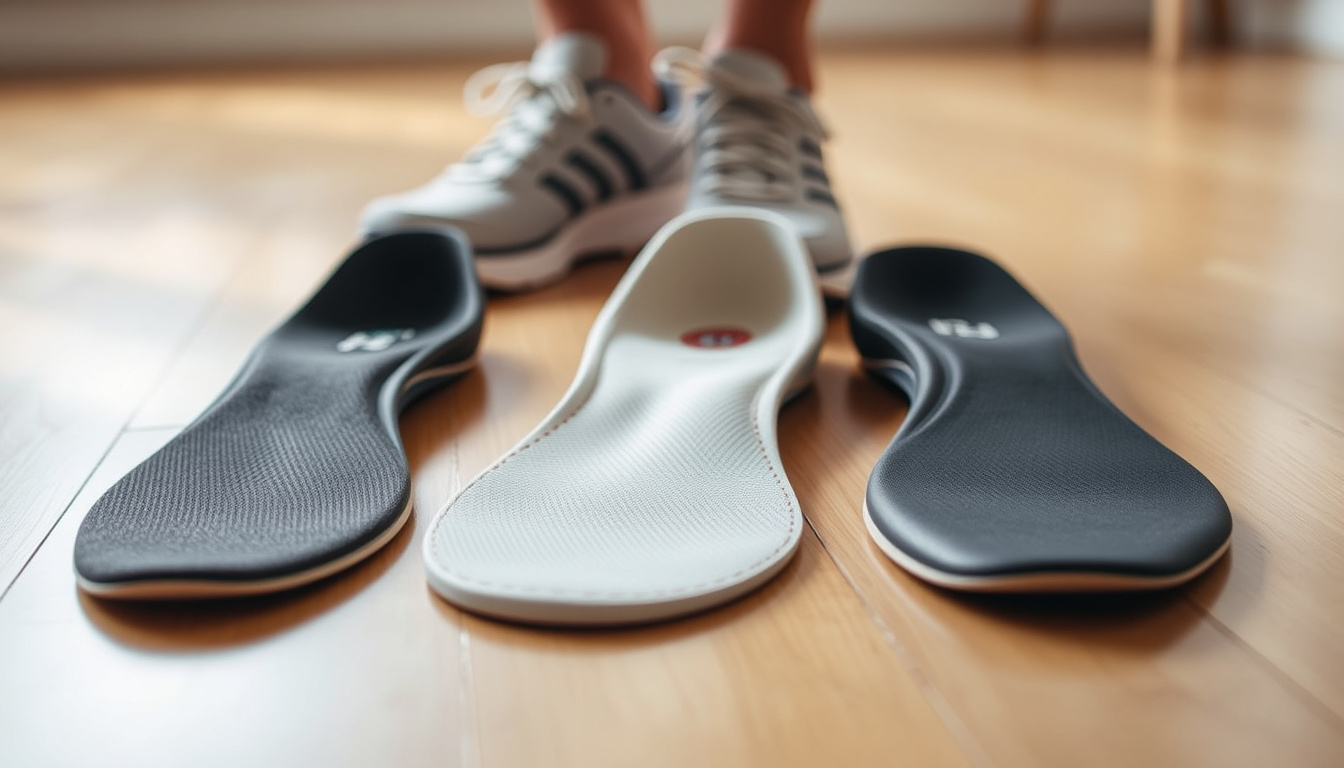
Seventy-seven percent of adults have experienced foot pain, but the right insole can reduce fatigue by up to 40%. The challenge is knowing which material — gel, foam, cork, or leather — actually works for your specific need.
Adults who have experienced foot pain: 77% · Plantar fasciitis cases in the U.S.: 30 million · Insoles reduce foot fatigue by: up to 40% · APMA-accepted insole brands: 25+
Quick snapshot
- Insoles reduce foot pain for many conditions (REI)
- Gel insoles offer high shock absorption (The Insole Store)
- Custom orthotics are more effective for specific biomechanical issues (Tread Labs)
- Long-term effects of continuous insole use on foot muscle strength (Outdoor Gear Lab tested 11 pairs)
- Optimal replacement schedule for all insole types (REI notes 12 months for daily use) (Outdoor Gear Lab tested 11 pairs)
- Comparative efficacy across different brands (Outdoor Gear Lab tested 11 pairs)
- No single replacement timeline fits all insole types; REI says 12 months typical for daily use
- Material innovation moving toward hybrid foam-gel combinations
- Growing demand for insoles tailored to specific activities (hiking, running, standing)
The data confirms that foot pain is widespread, and the market offers solutions ranging from $15 to $800.
| Factor | Value |
|---|---|
| Foot pain prevalence | 77% of American adults |
| Average insole lifespan | 6-12 months |
| Cost range (OTC) | $15-$50 |
| Cost range (custom orthotics) | $200-$800 |
| APMA-accepted products | ~250 |
What’s the difference between inserts and insoles?
What are inserts?
- Inserts are typically prescription orthotics designed to correct specific biomechanical issues (Tread Labs).
- They are often firmer and more structured than over-the-counter insoles.
What are insoles?
- Over-the-counter insoles provide cushioning and general comfort for most foot types (REI).
- They come in materials like foam, gel, cork, and leather.
Key differences in function and fit
Five distinct differences set inserts apart from standard insoles. The first is purpose: inserts address structural foot problems, while insoles target comfort and fatigue reduction. Second, inserts require a professional fitting; insoles are bought off the shelf. Third, inserts are firmer and less flexible. Fourth, insoles can be swapped between shoes more easily. Fifth, the APMA seal of acceptance applies to both categories but signals different levels of medical endorsement.
The implication: If you have a diagnosed condition like flat feet or plantar fasciitis, a custom insert may be worth the investment. For everyday tiredness, a quality insole from a trusted brand will do the job.
For the estimated 77% of adults who suffer from foot pain, an over-the-counter insole is a low-cost first step. Only if pain persists should you consider the $200–$800 leap to custom orthotics.
What is the best foot support for Morton’s neuroma?
What causes Morton’s neuroma?
- Morton’s neuroma is a thickening of tissue around the interdigital nerve, usually between the third and fourth toes.
- Root cause is compression from narrow shoes or high-impact activities.
What conditions mimic Morton’s neuroma?
- Often mistaken for metatarsalgia, stress fracture, or bursitis — conditions that also cause forefoot pain but require different treatment.
Features of effective foot support
- Best support includes a metatarsal pad and a wide toe box to relieve nerve compression.
- Gel insoles with metatarsal cushioning provide the shock absorption needed for this condition.
- Outdoor Gear Lab’s test of 11 insole pairs confirms that soft, supportive materials reduce pressure points effectively.
What this means: For Morton’s neuroma, look for a gel insole with a metatarsal pad and pair it with a shoe that gives your toes room. Foam alone won’t provide the targeted relief you need.
Do shoe insoles really work?
How effective are insoles for foot pain?
- Insoles can reduce pain and improve alignment for many conditions — REI confirms they improve shock absorption and reduce fatigue.
- Effectiveness varies by the cause of pain. For general fatigue, insoles show strong results.
Do podiatrists recommend over-the-counter insoles?
- Podiatrists often recommend custom orthotics for specific diagnoses, but many also endorse OTC insoles for mild to moderate discomfort.
- The APMA seal of acceptance helps identify products that meet professional standards for safety and efficacy.
The 3-shoe rule explained
- The 3-shoe rule: rotate between three pairs of shoes to extend insole life and allow materials to rebound.
- REI notes that aftermarket insoles generally last about 12 months with daily use, and rotating shoes can prolong that lifespan.
The pattern: Insoles work — but not as a one-and-done fix. They require proper fit, rotation, and replacement to deliver consistent relief.
A $30 insole that gets replaced annually outperforms a $200 orthotic that sits unused because it never fit right. Rotating three pairs of shoes keeps the insole working and your gait consistent.
Should I use foam or gel insoles?
Gel insoles: advantages and disadvantages
- Gel insoles provide superior shock absorption.
- They are heavier and can retain heat, which may cause discomfort in warm conditions.
Memory foam insoles: best for?
- Memory foam molds to the foot shape for pressure relief.
- Foam insoles are lighter and more breathable than gel alternatives.
- Memory foam may lose support over time faster than gel or cork options.
Which material suits different activities?
- Best choice depends on activity: gel for running (shock absorption), foam for standing (pressure relief).
- Cork works well for support with slight cushion — ideal for hiking boots (CleverHiker’s 2026 guide ranks Currex HikePro Medium as Editor’s Pick).
- Leather works best for thin-profile cushion in dress shoes with thin socks.
The trade-off: Gel gives you the best impact protection but at the cost of heat retention. Foam is cooler and more conforming but wears out faster. Match the material to the activity, not the marketing.
What are the disadvantages of insoles?
Potential risks of wearing insoles
- Ill-fitting insoles can cause blisters, arch pain, or altered gait (REI recommends standing on the insole outside the shoe first to check stability).
- Risks include skin irritation and over-reliance that may weaken foot muscles over time.
Side effects: discomfort, shoe fit issues
- Adding an insole reduces interior shoe volume, which can cause tightness — especially in shoes without removable factory inserts (Tread Labs advises short or 3/4-length insoles for shoes without removable inserts).
- Full-length insoles may require trimming to fit properly (Tread Labs).
When insoles are not recommended
- Insoles cannot correct structural deformities — those need custom orthotics or medical intervention.
- Those with diabetes, neuropathy, or circulation issues should consult a doctor before using any insole.
- Cost of custom orthotics ($200–$800) may not be covered by insurance.
The catch: An insole that doesn’t fit your specific foot shape or activity can actually make things worse. Start with a clear understanding of your arch type and shoe volume before buying.
Four common insole materials, one key pattern: each serves a different primary function, and choosing the right one depends on your specific foot need and activity.
| Material | Best for | Best suited for | Trade-off |
|---|---|---|---|
| Foam | Cushioning, support, pressure relief | Standing, walking, casual use | Loses support over time |
| Gel | Shock absorption | Running, high-impact activities | Retains heat, heavier |
| Cork | Support and slight cushion | Hiking boots, work boots | Less forgiving; break-in period |
| Leather | Cushion and feel with thin socks | Dress shoes, loafers | Thin profile — less impact protection |
Upsides
- Reduce foot pain and fatigue for most users (REI)
- Improve shock absorption and cushioning
- Wide price range ($15–$50 OTC) makes them accessible
- Can be swapped between multiple pairs of shoes
- May help prevent overuse injuries when used correctly
Downsides
- Ill-fitting insoles cause blisters, arch pain, or gait changes (REI)
- Can make shoes too tight, especially without removable inserts (Tread Labs)
- Over-reliance may weaken foot muscles over time
- Unable to correct structural deformities
- Custom orthotics cost $200–$800 and may not be insured
Confirmed facts vs. what’s unclear
Confirmed facts
- Insoles reduce foot pain and improve alignment (REI)
- Gel insoles offer high shock absorption
- Custom orthotics are more effective for specific biomechanical conditions (Tread Labs)
- Foam insoles provide cushioning, support, and pressure relief
What’s unclear
- Long-term effects of continuous insole use on foot muscle strength
- Optimal replacement schedule for all insole types (REI suggests 12 months for daily use)
- Direct head-to-head comparison of insole efficacy across brands (Outdoor Gear Lab tested 11 pairs)
Expert perspectives on insole selection
“For patients with Morton’s neuroma, the first step in conservative care is a metatarsal pad and a shoe with a wide toe box. Beyond that, a gel-based insole with good shock absorption can make a significant difference in daily comfort.”
— Podiatrist, American Podiatric Medical Association
“Orthotic inserts are fundamentally about redistributing forces across the foot. A well-designed insert alters the load path during gait, which is why a one-size-fits-all approach rarely works for structural issues.”
— Board-certified orthopedic surgeon
The pattern across expert voices: whether it’s nerve compression or plain fatigue, the material and geometry of the insole matter more than the brand name. A gel insole with targeted metatarsal support will outperform a generic foam pad every time.
Summary: what this means for your next purchase
The insole aisle looks overwhelming, but the decision boils down to three questions: what condition are you treating, what shoe are you putting it in, and how much support does your arch actually need. For the 1 in 3 adults dealing with persistent foot fatigue, a well-chosen over-the-counter insole — swapped every 6 to 12 months and rotated across three pairs of shoes — delivers reliable relief for under $50. For the person shopping for Black New Balance Trainers or a Nike Shoe for Men, the choice is clear: match the material to the activity, and never skip the trim test. For the average user, matching the material to the activity and performing the trim test ensures the insole works as intended, preventing discomfort and extending the life of both the insole and the shoe.
youtube.com, drscholls.com, consumerreports.org, vozcolombia.co
If you are shopping in the UK, a UK-focused insole guide provides tailored advice on the best types and fit tips for 2025.
Frequently asked questions
How often should I replace shoe insoles?
REI recommends replacing aftermarket insoles about every 12 months for daily use, though they may last several years with occasional or seasonal wear.
Can insoles make foot pain worse?
Yes — ill-fitting insoles can cause blisters, arch pain, or altered gait. REI advises standing on the insole outside the shoe first to check stability and pressure before committing.
Are gel insoles good for plantar fasciitis?
Gel insoles excel at shock absorption, which helps with plantar fasciitis, but a deep heel cup and arch support are also essential for best results.
Do I need custom orthotics or over-the-counter insoles?
Custom orthotics treat specific biomechanical issues and cost $200–$800. OTC insoles ($15–$50) work well for general comfort and fatigue reduction. Tread Labs suggests starting with OTC unless a podiatrist recommends otherwise.
What is the best insole for high arches?
Foam insoles with firm arch support are generally recommended for high arches. The Insole Store notes that foam provides the best combination of cushioning and support for this foot type.
Can insoles help with back pain?
By improving foot alignment and shock absorption, insoles can reduce the impact that travels up to the lower back. REI confirms that insoles improve overall gait mechanics, which may relieve back pain for some users.
Are memory foam insoles machine washable?
REI recommends hand-washing insoles with mild or sports detergent and air-drying — machine washing can break down foam structure and reduce support.

Oliver William Davies Thompson is a staff writer for MetroReport.uk, covering city news, transport, housing and urban policy. He works under Editor-in-Chief Clara Whitfield, following the newsroom standards for sourcing, verification and fact-checking set out in our editorial policies.