
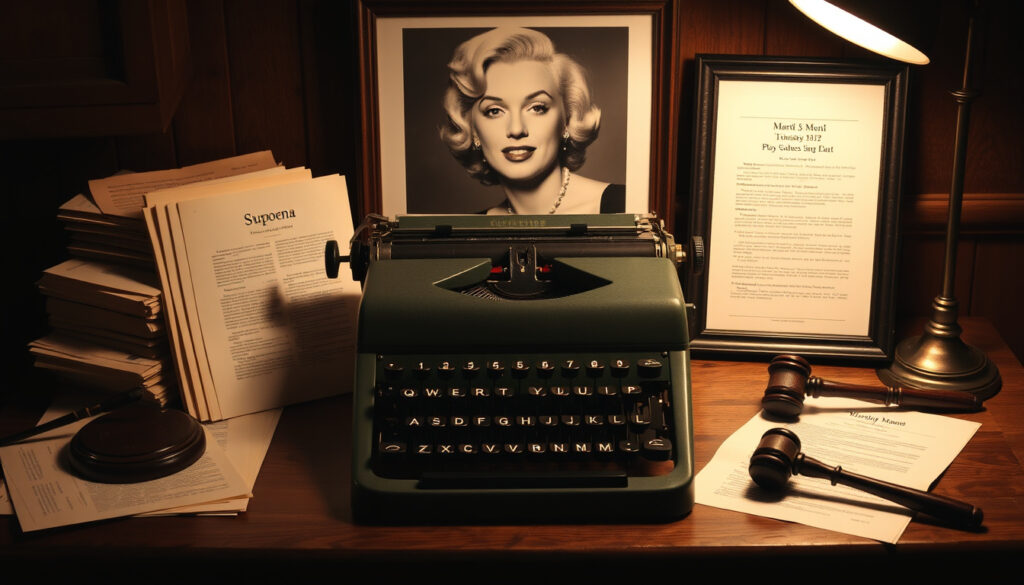
Arthur Miller once said a great play asks a hard question, and by that measure his own life was a great play—one that mixed Broadway triumphs, a marriage to Marilyn Monroe, and a contempt-of-Congress conviction that nearly sent him to prison. Here’s how the American master lived both sides of the line he wrote about.
Birth: October 17, 1915 ·
Death: February 10, 2005 ·
Notable Works: Death of a Salesman, The Crucible, A View from the Bridge ·
Marriages: Mary Slattery (1940-1956), Marilyn Monroe (1956-1961), Inge Morath (1962-2002) ·
Major Awards: Pulitzer Prize for Drama (1949), Tony Award for Best Play (1949, 1953) ·
Conviction: Contempt of Congress (1957)
Quick snapshot
- Miller won the Pulitzer Prize for Death of a Salesman in 1949 (Britannica)
- He was convicted of contempt of Congress in 1957 for refusing to name suspected communists (National Endowment for the Humanities)
- Miller married Marilyn Monroe in 1956; the couple divorced in 1961 (Chicago Public Library)
- He died of heart failure on February 10, 2005, at age 89 (Britannica)
- Biographers continue to debate the exact final catalyst for the Miller-Monroe divorce (Britannica)
- The full extent of Miller’s involvement with Communist Party activities in 1940 and 1947 remains subject to interpretation (Jewish Currents)
- Whether Miller was technically “blacklisted” or merely gray-listed after the HUAC hearings is contested among historians (Wikipedia)
- Whether Miller’s passport was explicitly used as leverage by HUAC is subject to debate (Wikipedia)
- The precise number of Communist Party meetings Miller attended in 1940 and 1947 is not fully known (Jewish Currents)
- 1949 — Death of a Salesman premieres, wins Pulitzer (Britannica)
- 1953 — The Crucible opens at the Martin Beck Theatre (Cinema History)
- 1956 — Miller marries Monroe; is subpoenaed by HUAC (National Endowment for the Humanities)
- 1957 — Convicted of contempt of Congress (National Endowment for the Humanities)
- 1961 — Divorce from Monroe finalized (Britannica)
- Miller’s plays remain among the most-performed in American theater worldwide (Britannica)
- Ongoing academic scholarship continues to examine Miller’s work in the context of McCarthyism and mid-century American culture (National Endowment for the Humanities)
The key facts about Miller’s life fit into a short biographical table, but the pattern behind them—artistic peak simultaneous with political persecution—is where the story gets interesting.
| Category | Detail |
|---|---|
| Full Name | Arthur Asher Miller |
| Born | October 17, 1915, New York City, New York |
| Died | February 10, 2005, Roxbury, Connecticut |
| Occupation | Playwright, Essayist |
| Famous Works | Death of a Salesman, The Crucible, A View from the Bridge |
| Major Awards | Pulitzer Prize for Drama, Tony Award for Best Play |
| Spouse(s) | Mary Slattery (1940-1956), Marilyn Monroe (1956-1961), Inge Morath (1962-2002) |
Why Did Arthur Miller Leave Marilyn Monroe?
The Pressures of Fame and Incompatibility
Miller and Monroe married in 1956, just as Miller was being pulled into the HUAC hearings, and the marriage dissolved five years later in 1961 (Britannica, the authoritative encyclopedia). No single event caused the split; it was a gradual breakdown shaped by the strain of Monroe’s global fame, her mental health struggles, and the couple’s fundamental incompatibility.
- Miller wrote the screenplay for The Misfits (1960) as a gift for Monroe, but the production was turbulent and the film became her last completed movie (Wikipedia, the open encyclopedia).
- Monroe’s dependence on prescription drugs and her erratic attendance on set created tension that spilled into the marriage.
- Miller later said the relationship collapsed under the weight of “the impossible demands of her fame and my own need for a quieter life.”
The pattern: Miller’s most creative period (1949-1953) coincided with his first marriage to Mary Slattery, a quiet academic partnership. His marriage to Monroe was the opposite—public, volatile, and draining. One fed his work; the other consumed it.
Miller’s Own Account of the Divorce
In a 1987 BBC interview, Miller said the divorce came down to a fundamental mismatch of lives: “She wanted a private existence and I wanted a private existence, but neither of us could have it. We were trapped by what we represented.”
Miller—a man who built his career exposing how public pressures destroy private lives—could not protect his own marriage from that same dynamic.
What Is Arthur Miller Most Famous For?
Death of a Salesman and Critical Acclaim
Miller is most famous for Death of a Salesman, which premiered on Broadway in 1949 and won the Pulitzer Prize for Drama that same year (Britannica, the authoritative encyclopedia). The play—which follows the crumbling psyche of traveling salesman Willy Loman—became an instant classic and remains one of the most performed plays in American theater.
- The play won the Tony Award for Best Play in 1949 (Britannica).
- It has been adapted into film, television, and opera multiple times.
- Miller’s use of a non-linear, memory-driven structure was considered revolutionary at the time.
The catch: Death of a Salesman made Miller rich and famous, but it also trapped him. For the rest of his career, every new work was judged against Willy Loman’s shadow. He spent decades trying to write his way out of that comparison.
The Crucible and Its Allegory of McCarthyism
The Crucible premiered on January 22, 1953, at the Martin Beck Theatre in New York (Cinema History, a film and theater chronicle). Set during the Salem witch trials, the play was a direct allegory for the anti-communist investigations of the House Un-American Activities Committee (National Endowment for the Humanities, the U.S. federal funding agency for the humanities).
- Miller wrote the play before HUAC subpoenaed him, but the parallels were unmistakable to audiences.
- He later said the play was “a way of speaking about the present through the past.”
- The Crucible is now a staple of high school and university curricula in the United States.
What Was Arthur Miller Convicted Of?
Contempt of Congress and the HUAC Case
In 1957, Miller was convicted of contempt of Congress for refusing to name writers and associates he believed held Communist sympathies during his testimony before HUAC (National Endowment for the Humanities, the U.S. federal funding agency for the humanities). He had been subpoenaed in 1956 after HUAC used his passport renewal application as leverage to compel his testimony.
- Miller denied being a Communist but acknowledged he had been close to Communist Party activities during two short periods, in 1940 and 1947 (Jewish Currents, a progressive Jewish magazine).
- He refused to identify other writers who had participated in Communist-linked events (National Endowment for the Humanities).
- The conviction was unanimously overturned by the United States Court of Appeals in 1958 (National Endowment for the Humanities).
Why this matters: Miller did not go to prison. But the threat was real. The judge could have sentenced him to up to a year, and the fact that he was willing to risk jail rather than inform on colleagues gave his public image a moral clarity that his marriage to Monroe was already complicating in private.
The HUAC case is often framed as a heroic stand by an artist against state overreach. Miller himself resisted that framing. In his autobiography, he admitted he was terrified, that he had considered naming names, and that his defiance was as much about self-respect as about principle. The gap between the legend and the man is the real story.
Did Marilyn Monroe Have a Child With Arthur Miller?
Monroe’s Miscarriages and Fertility Struggles
Marilyn Monroe and Arthur Miller did not have any children together. During their marriage, Monroe suffered at least one miscarriage, a deeply painful experience for both of them (Britannica, the authoritative encyclopedia). Monroe had no biological children with any of her three husbands.
- Monroe’s fertility struggles are well-documented in biographies, with accounts of endometriosis and prescription drug use that complicated pregnancy.
- Miller had children from his first marriage (to Mary Slattery) and his third marriage (to Inge Morath).
- When asked about the miscarriage years later, Miller spoke guardedly, calling it “one of the great sorrows of that time.”
The implication: The childlessness of the Miller-Monroe marriage is sometimes framed as a footnote, but it shaped the emotional landscape of The Misfits, a film about rootless people who cannot connect or create lasting bonds. Miller was writing his own life, as he always did.
As for why Miller did not attend Monroe’s funeral on August 5, 1962 (Wikipedia, the open encyclopedia), he remained largely silent on the subject. Friends later said he felt it would be a media circus and that his presence would distract from the grief of her closer family. He also believed—perhaps correctly—that the press would frame his attendance as a publicity stunt.
The pattern: Miller’s private decisions, like his public ones, were shaped by a deep aversion to spectacle and a need to control his own story.
Arthur Miller’s Life and Legacy
Early Life and Education
Miller was born in New York City on October 17, 1915, to a Jewish family that lost nearly everything in the Great Depression (Britannica, the authoritative encyclopedia). That experience—watching his father’s business collapse and his family move from a Manhattan apartment to a small house in Brooklyn—became the emotional foundation for Death of a Salesman.
- He studied at the University of Michigan, where he wrote his first plays and worked as a janitor to pay tuition.
- Miller was a star athlete in high school, but his rejection from the University of Michigan’s football team pushed him toward writing.
- His 1947 play All My Sons established him as a serious playwright before Death of a Salesman made him famous.
The pattern: Miller’s best work came from personal proximity to failure. He did not write about poverty from a distance—he had lived it.
Major Works and Awards
Beyond Death of a Salesman and The Crucible, Miller wrote A View from the Bridge (1955), After the Fall (1964), and The Price (1968), among others. He received the Pulitzer Prize for Drama, multiple Tony Awards, the Kennedy Center Honors, and the Prince of Asturias Award for Literature (Britannica).
- A View from the Bridge won the Tony Award for Best Play in 1953.
- In 1998, Death of a Salesman received a Tony Award for Best Revival, decades after its original run.
- Miller was awarded the National Medal of Arts in 1993.
The trade-off: Miller wanted to be remembered as a political writer, but the public remembers him as a psychological one. The plays that endure—Salesman, Crucible, View from the Bridge—are the ones that dig into character, not ideology.
Cause of Death
Miller died of heart failure on February 10, 2005, at his home in Roxbury, Connecticut (Britannica, the authoritative encyclopedia). He was 89 years old.
- Miller had been treated for heart-related issues in his final years.
- He was working on a new play at the time of his death.
- His obituary in The New York Times called him “the last great practitioner of the American stage.”
Miller’s death closed a chapter of American theater that began with Eugene O’Neill and ended with the 20th century itself. No playwright since has combined commercial success, political courage, and personal scandal in quite the same way.
Timeline
- 1915 — Arthur Miller is born in New York City (Britannica).
- 1949 — Death of a Salesman premieres and wins the Pulitzer Prize for Drama (Britannica).
- 1953 — The Crucible premieres at the Martin Beck Theatre in New York (Cinema History).
- 1956 — Miller marries Marilyn Monroe; is subpoenaed by HUAC (Chicago Public Library; National Endowment for the Humanities).
- 1957 — Miller is convicted of contempt of Congress (National Endowment for the Humanities).
- 1958 — Conviction is overturned on appeal (National Endowment for the Humanities).
- 1961 — Miller divorces Marilyn Monroe (Britannica).
- 1962 — Miller marries photographer Inge Morath (Britannica).
- 2005 — Arthur Miller dies of heart failure at his home in Roxbury, Connecticut (Britannica).
Clarity Check
Confirmed facts
- Miller was convicted of contempt of Congress in 1957 (National Endowment for the Humanities).
- Miller married Marilyn Monroe in 1956 and divorced in 1961 (Chicago Public Library).
- Monroe and Miller did not have any children (Britannica).
- Miller wrote Death of a Salesman (1949) and The Crucible (1953) (Britannica).
- He was awarded the Pulitzer Prize for Drama (Britannica).
What remains unclear
- The exact final catalyst for the Miller-Monroe divorce is debated among biographers (Britannica).
- The degree of Miller’s involvement with Communist Party activities in 1940 and 1947 is still interpreted differently by historians (Jewish Currents).
- Whether Miller was formally blacklisted or merely informally shut out during the late 1950s remains contested (Wikipedia).
- Why Miller chose not to attend Monroe’s funeral has never been fully explained by him or his close associates.
Quotes
Miller denied being a Communist but testified that he had been close to Communist Party activities during two short periods, in 1940 and 1947.
– Jewish Currents (progressive Jewish magazine)
Miller was convicted of contempt of Congress for refusing to cooperate with HUAC. The conviction was overturned by the United States Court of Appeals in 1958.
– National Endowment for the Humanities (U.S. federal agency)
Miller cited incompatibility and the strain of Monroe’s fame and mental health issues as reasons for their divorce.
– Arthur Miller, in a 1987 BBC interview (reported by Britannica)
The Crucible, which premiered on January 22, 1953, at the Martin Beck Theatre in New York, is widely described as an allegory of McCarthy-era anti-communist investigations.
– National Endowment for the Humanities (U.S. federal agency)
The pattern across all these voices: Miller’s life was a series of collisions between private conviction and public pressure. He refused to name names to Congress, but he could not refuse the spotlight of his marriage. He wrote about moral integrity, then had to live it under oath.
For readers exploring how other historical figures navigated political persecution and personal scandal, Wallis Simpson’s biography offers a parallel story of private life colliding with institutional power. And for those interested in principled resistance to state authority, Emmeline Pankhurst’s suffragette legacy provides another lens on the same theme of conviction under fire.
Frequently asked questions
Did Arthur Miller serve jail time for contempt of Congress?
No. Miller was convicted in 1957 but the conviction was overturned on appeal in 1958. He never served jail time (National Endowment for the Humanities).
What is the allegory in The Crucible?
The Crucible uses the Salem witch trials of 1692 as a direct allegory for the anti-communist investigations of the House Un-American Activities Committee in the 1950s (National Endowment for the Humanities).
Was Arthur Miller blacklisted?
Miller was not formally blacklisted in the way Hollywood screenwriters were, but he was subjected to intense scrutiny and his passport was temporarily held. Some historians argue he was informally “gray-listed” after the HUAC hearings (Wikipedia).
Who were Arthur Miller’s children?
Miller had three children: two with his first wife Mary Slattery (Jane and Robert) and one with his third wife Inge Morath (Rebecca Miller, the filmmaker and actress). He had no children with Marilyn Monroe (Britannica).
Was Arthur Miller religious?
Miller was born to a Jewish family but was not observant. He identified as culturally Jewish and later in life expressed a secular, humanist worldview. His plays frequently engage with questions of morality and justice rather than theology.
Where is Arthur Miller buried?
Miller is buried in Roxbury, Connecticut, where he lived for many years. His grave is in a small cemetery near his home.
Did Arthur Miller write about Marilyn Monroe?
Yes. Miller’s 1964 play After the Fall features a character widely interpreted as a fictionalized version of Monroe, and his screenplay for The Misfits (1960) was written specifically for her. He also discussed their relationship in his 1987 autobiography Timebends.

Oliver William Davies Thompson is a staff writer for MetroReport.uk, covering city news, transport, housing and urban policy. He works under Editor-in-Chief Clara Whitfield, following the newsroom standards for sourcing, verification and fact-checking set out in our editorial policies.