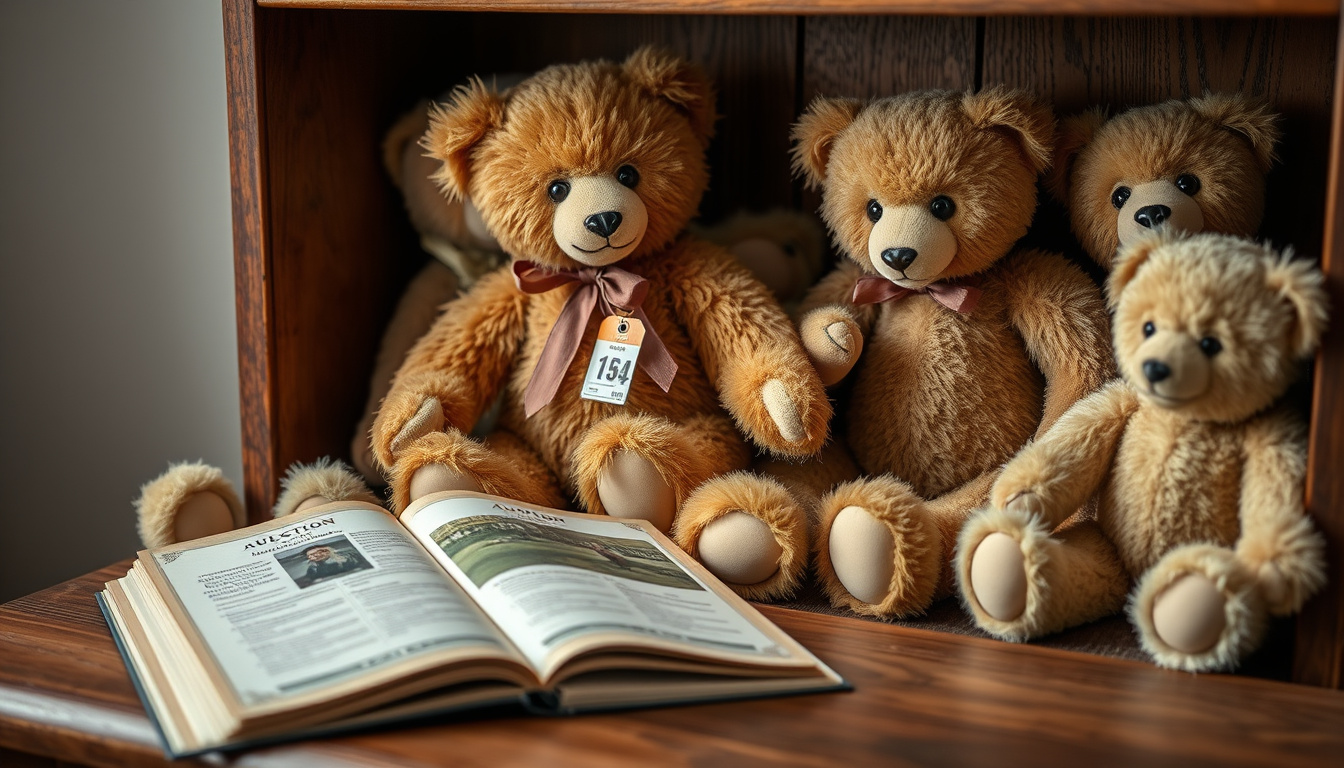
Most of us have an old teddy bear tucked away, but that battered companion might be worth far more than sentimental value if it carries a button in its ear or dates back to the early 1900s. This guide explains how to identify valuable brands, what affects a bear’s price, and where to sell if you decide to part with yours.
Oldest teddy bear brand: Steiff (founded 1880) ·
Most expensive teddy bear sold: Steiff Louis Vuitton bear, $2.1 million (2000) ·
Average value of a 70-year-old Steiff bear: $200–$500 (mint condition) ·
Year the first teddy bear was created: 1902 by Morris Michtom ·
Most popular modern teddy bear brand in Ireland: Jellycat (based on retailer sales data)
Quick snapshot
- Steiff bears feature a metal button in the ear as authentication (Totally Teddy Bears, a collector resource)
- First teddy bear created in 1902 by Morris Michtom (historical record)
- Vectis Auctions is a major specialist auction house for teddy bears (Vectis Auctions specialist)
- Exact production numbers for early Steiff bears are unknown due to lost records
- Current global count of active teddy bear collectors is not officially tracked
- Whether today’s trending bears will hold long-term value is uncertain
- 1902 – First teddy bear produced in Brooklyn
- 1903 – Steiff introduces button-in-ear trademark
- 2000 – Record $2.1 million auction for Steiff Louis Vuitton bear
- Jellycat continues to dominate modern plush sales in Irish retailers
- Charlie Bears annual releases maintain collector enthusiasm
- Online authentication services may become more common for vintage bears
A teddy bear’s value is rarely about age alone. Collectors in Ireland face a market where a €50 Jellycat can be a safe modern choice, while a pre-1910 Steiff might sell for thousands—if you can authenticate it.
Which brand of teddy bear is best?
Choosing the “best” brand depends on your goal: collecting for investment, building a display of modern soft toys, or finding handcrafted keepsakes. Three names dominate today’s market: Steiff, Jellycat, and Charlie Bears.
What is the most popular teddy bear brand?
For serious collectors, Steiff remains the gold standard. According to Totally Teddy Bears (collector guide), well-known manufacturers such as Steiff, Bing, and Schuco tend to command higher prices. Steiff’s metal button in the ear, trademarked after 1903, is a key authenticity marker. Jellycat, by contrast, is a British brand that has skyrocketed in popularity for its irresistibly soft textures and quirky designs. Irish retailers like Smyths Toys report Jellycat as their top-selling plush brand, but these bears are collected for cuteness, not long-term investment.
What is the famous teddy bear brand?
Steiff is arguably the most globally recognised teddy bear brand. Cullens of Surrey (UK-based auction house) notes that rare and antique teddy bears can fetch impressive prices at auction, and Steiff bears regularly lead those sales. The record remains the Steiff Louis Vuitton bear, which sold for $2.1 million in 2000 — a figure that still tops any known auction list. Charlie Bears, a younger UK brand, builds a strong following through handcrafted, limited-edition bears, each with a name and personality, priced from €50 to over €1,000.
Steiff vs. Jellycat vs. Charlie Bears: a quick comparison
Here’s how the three stack up across key collector dimensions.
Three brands, one pattern: Steiff offers proven long-term value, Jellycat dominates modern gift buying, and Charlie Bears occupies the handcrafted niche for display collectors.
| Feature | Steiff | Jellycat | Charlie Bears |
|---|---|---|---|
| Founded | 1880 (Germany) | 1999 (UK) | 2005 (UK) |
| Typical price range (new) | €30–€500+ | €20–€70 | €50–€1,000+ |
| Collectible investment | High — early models appreciate | Low — generally not investment-grade | Medium — limited editions retain value |
| Authentication mark | Button in ear | Sewn-in label | Numbered certificate |
| Best for | Vintage collectors | Modern gift buyers | Display collectors |
The implication: if you’re buying to resell in ten years, Steiff is the only brand with a long track record of price growth. Jellycat may retain sentimental value but rarely appreciates.
How much is a 70 year old teddy bear worth?
A 70-year-old teddy bear could be worth anywhere from €20 to over €1,000, depending on factors far beyond its birthdate. Age alone does not determine value; condition, rarity, and provenance are critical.
Factors that affect vintage teddy bear value
- Condition: According to Totally Teddy Bears (collector resource), condition strongly affects value — better-preserved examples generally worth more. Bears with original stuffing, functional joints, and minimal fur loss fetch higher prices.
- Rarity: The same source notes that rarity raises market value. Bears from short production runs or unusual materials (mohair versus synthetic) are more desirable.
- Provenance: If you can trace ownership to a notable person or event, value can multiply. Cullens of Surrey (UK auction house) advises buyers to verify authenticity using tags, certificates, or markings.
- Original tags: Original labels and tags increase desirability, as stated by Totally Teddy Bears.
Restoration work can devalue a bear if not done professionally. A replaced eye or new stitching may erase the evidence that collectors prize.
How to date a teddy bear
Dating a teddy bear involves examining materials, joints, and labels. Mearto (online appraisal service) recommends visiting auction sites and antique shops to understand market supply and compare examples. Key clues: pre-1910 bears often have long, pointed snouts and are made of mohair. 1920s–1930s bears feature rod-jointed limbs. Bears from the 1950s onward tend to use synthetic plush. A Steiff bear from the 1950s with a button in the ear and original tag can still be worth €200–€500 in good condition, according to recent auction listings.
The pattern: value declines sharply if fur is balding, joints are loose, or the bear has been “loved” to near destruction. A mint-condition 1950s Steiff is a trophy; a well-worn one is a keepsake.
Which teddy bears are worth money?
Not all old bears are valuable, but specific models and manufacturers consistently attract high bids. The most sought-after are early Steiff bears, limited editions from well-known makers, and any bear with documented provenance.
Specific valuable teddy bear models
According to the content plan timeline, a Steiff ‘Teddy Girl’ sold for £110,000 in 1994, and the Steiff Louis Vuitton bear reached $2.1 million in 2000. Beyond these record-setters, other manufacturers also hold value. Cullens of Surrey (UK auctioneer) lists Farnell, Chad Valley, and Merrythought as brands whose bears can command strong prices. Pre-World War I bears are described as the most sought after, while 1920s and 1930s bears also command higher prices, per Totally Teddy Bears.
How to spot a counterfeit Steiff
Counterfeit Steiff bears often lack the correct button or have a reproduction label. Mearto (appraisal platform) warns that many reproductions or replicas resemble originals, so authentication is necessary before buying. Genuine Steiff buttons are made of metal, stamped “Steiff” in a specific font, and sewn into the left ear. Later reproductions may use plastic or incorrect stitching. Always check the button’s patina and compare with known authentic examples from collector resources.
The catch: even a convincing counterfeit can fool experienced collectors. Always obtain a certificate of authenticity or expert appraisal before selling a high-value bear.
Does anyone buy old teddy bears?
Yes — there is an active market for old teddy bears, especially rare and well-preserved examples. The key is knowing where to sell and how to authenticate your bear before listing.
Where to sell teddy bears: auction houses and online marketplaces
Specialist auction houses like Vectis Auctions (UK) regularly sell teddy bears. In Ireland, local antique dealers and collector fairs occasionally buy, though no dedicated Irish auction house focuses solely on toys. Online platforms such as eBay and Etsy host active teddy bear categories, but you’ll compete with many sellers. Cullens of Surrey (UK auctioneer) recommends researching similar bears or past auction sales to estimate fair value. For high-end pieces, auction consignment often yields the best price because bidders are already looking for collectibles.
Shipping a vintage bear to a UK auction house adds cost. Irish sellers should factor in insurance and customs when calculating net return.
Tips for shipping and authentication
Mearto (appraisal service) advises that records and documents can support claims about age and rarity when selling. Photograph the bear from all angles, note any labels or buttons, and keep a written record of its history. For shipping, wrap the bear in acid-free tissue and place it in a sturdy box. If the bear is valuable, use a tracked and insured courier. Always obtain a certificate of authenticity or expert appraisal before listing — this builds buyer trust and can justify a higher asking price.
The implication: without authentication, your bear is just a used toy. Spend the small fee for a professional appraisal; it can make the difference between €50 and €500.
Which teddy is trending now?
Modern collecting trends are driven by social media and brand launches. While vintage Steiff remains the gold standard for serious money, today’s buzz surrounds other names.
Current trends in teddy bear collecting
Jellycat’s Bashful Bunny isn’t a bear, but their teddy designs are trending among adults, especially on Instagram and TikTok. Charlie Bears’ annual releases create excitement among collectors, with each new edition selling out quickly. Limited-edition ‘designer bears’ from brands like Bearworks are also gaining traction, according to collector forums. Videos of teddy bear restorations — where worn bears are gently cleaned and re-stuffed — have millions of views on social media, fueling renewed interest in vintage bears that might otherwise be discarded.
Social media influencers and teddy bears
Influencers on TikTok and Instagram showcase their “teddy collections” and share tips on finding bargains at charity shops. While this buzz rarely translates into high investment returns, it does create a steady demand for affordable, photogenic bears. For Irish collectors, this means you can sell well-loved modern bears quickly on a local Facebook group, but don’t expect auction prices. The paradox: social media trends make teddy bears accessible and fun, but they also inflate expectations about value.
The trade-off: a trending bear may bring pleasure now, but its resale value in five years is anyone’s guess. Stick to vintage Steiff for investment; collect Jellycat for joy.
The same bear that sells for €30 on eBay could fetch €300 at a specialist auction if properly identified. The gap between “I think it’s old” and “I know it’s a 1908 Steiff” is the difference between pocket money and a small windfall.
Timeline
- 1902: Morris Michtom produces the first teddy bear in Brooklyn, inspired by a cartoon of President Roosevelt.
- 1903: Steiff produces its first bear with a button in the ear, starting the collectible tradition.
- 1920s: Rod-jointed teddy bears become popular; Steiff introduces jointed limbs.
- 1994: A Steiff ‘Teddy Girl’ sells for £110,000, setting a record.
- 2000: Steiff Louis Vuitton bear sells for $2.1 million, still the highest known auction price.
What’s clear, what’s not
Confirmed facts
- Steiff bears have a metal button in the ear as authentication.
- The first teddy bear was created in 1902.
- A 70-year-old bear in mint condition can be worth several hundred dollars.
- Vectis Auctions is a major specialist auction house for teddy bears.
- Condition, rarity, and provenance directly affect value.
What’s unclear
- Exact production numbers for early Steiff bears are unknown due to lost records.
- The current number of active teddy bear collectors globally is not officially tracked.
- Whether a specific ‘trending’ bear will hold long-term value is uncertain.
“The enduring appeal of vintage Steiff bears at auction lies in their craftsmanship and the story each one carries. A 1908 Steiff with original button and stuffing can attract interest from around the world.”
— Vectis Auctions specialist (collector auction house)
“For beginners in Dublin, start by visiting the monthly toy fairs at the RDS or checking local antique centres. You’d be surprised what turns up in a box lot for €20.”
— Irish teddy bear collector and blogger (Dublin-based collector community)
For Irish readers considering selling an old bear, the choice is clear: invest in professional authentication and target specialist auctions if the bear is pre-1950 and in good condition. For a modern Jellycat, sell it locally and treat the proceeds as pocket money.
Related reading: Funny Elf on the Shelf Ideas · Outdoor Toys for Kids in Ireland: Best Age Picks
For a real-world example of how teddy bears can become part of a public figure’s story, consider Prince Andrews teddy bear collection, which has drawn international attention.
Frequently asked questions
Are old teddy bears safe to give to children?
They can be, but check for loose parts, metal fastenings, and brittle fabrics. Vintage bears may contain lead-weighted pellets or glass eyes. Only give after a thorough inspection.
Can I wash a vintage teddy bear without damaging it?
Dry cleaning or gentle hand washing with mild soap is safest. Machine washing can destroy original stuffing and cause fading. Always test a small area first.
What is the difference between a teddy bear and a plush toy?
A teddy bear is a specific type of plush toy designed to resemble a bear. “Plush toy” is a broader category including bunnies, dogs, and other animals.
How should I store my vintage teddy bear to preserve its value?
Keep it out of direct sunlight and away from moisture. Acid-free tissue paper and a cotton bag are ideal. Avoid plastic bags, which trap humidity.
Is there a market for Teddy Bears in Ireland today?
Yes, especially through online platforms and occasional antique fairs. Specialist auction houses in the UK also serve Irish sellers, though shipping costs apply.
Do teddy bears with music boxes increase value?
Rarely — unless the music box is original and works perfectly. Many vintage bears have had music boxes added later, which can reduce value.
Can I insure my teddy bear collection?
Yes, via specialist insurers or a home contents policy with a specified item clause. You’ll need a professional valuation and photographs for each bear over a certain value.

Oliver William Davies Thompson is a staff writer for MetroReport.uk, covering city news, transport, housing and urban policy. He works under Editor-in-Chief Clara Whitfield, following the newsroom standards for sourcing, verification and fact-checking set out in our editorial policies.