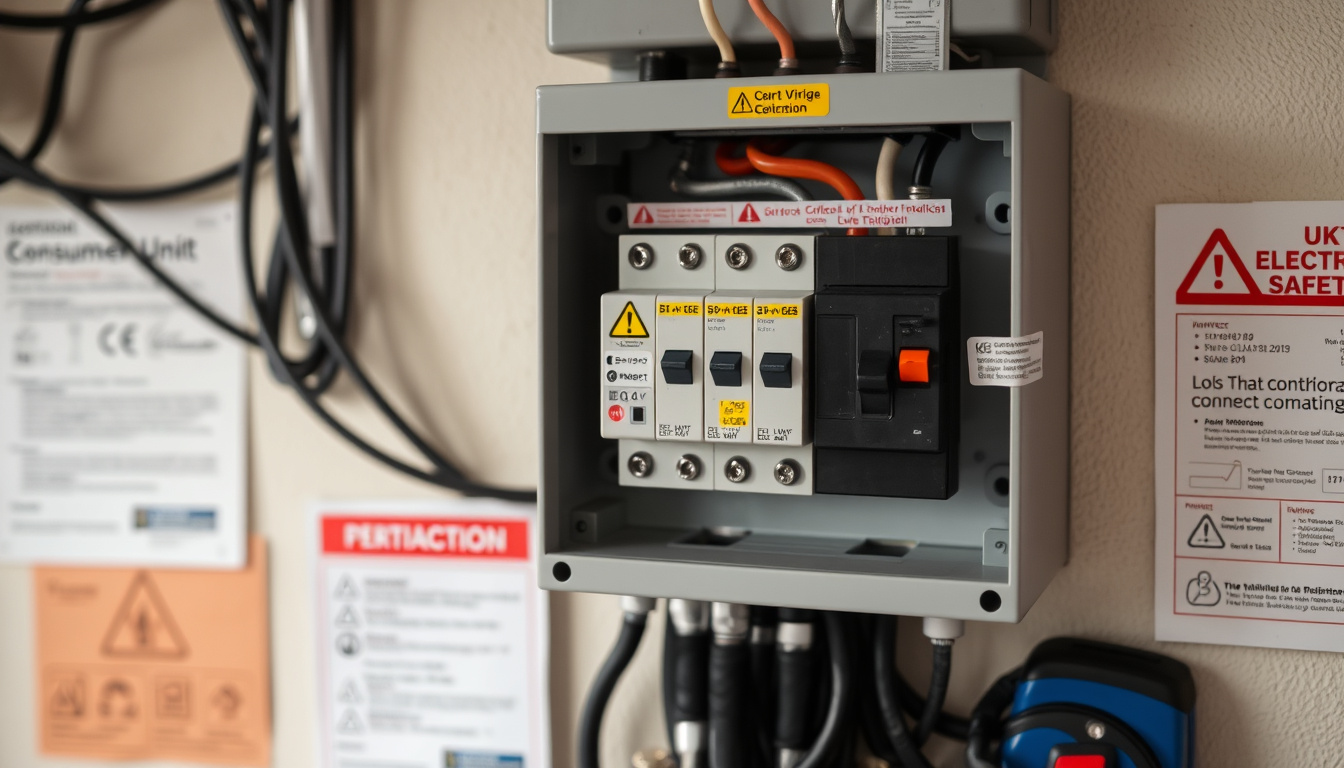
Anyone who has peered into a dusty cupboard only to find a fuse box that looks older than the house itself has probably wondered: is it time to upgrade? The question is more than cosmetic — replacing a consumer unit comes with a price tag of £500 to £1,200, strict legal requirements under Part P of the Building Regulations, and a few surprises if your wiring is past its prime, and this guide walks through the costs, the rules, and the practical steps so you know exactly what to expect.
Average cost: £500–£1200 · DIY allowed? No (UK regulations) · Requires full rewire? No
Quick snapshot
- Consumer unit replacement costs £500–£1,200 (Total Skills (UK electrical training provider))
- DIY replacement is illegal under UK Part P (Electrical Safety First (UK safety regulator))
- New consumer units must have metal enclosures (Elec-Mate (electrical installation guides))
- Exact time on site varies widely — no single figure confirmed (Total Skills (UK electrical training provider))
- Whether a full rewire is needed depends on the specific wire condition (Electrical Safety First (UK safety regulator))
- Metal enclosure requirement has applied since January 2016 (Total Skills (UK electrical training provider))
- Testing must include insulation resistance and RCD trip times (Elec Training (electrical certification body))
- All new installations must comply with BS 7671 18th Edition (Electrical Safety First (UK safety regulator))
- Surge protection may be required unless a risk assessment waives it (Shiny Spark (electrical contractor blog))
Five key facts, one pattern: the cost and legality of replacing a consumer unit are tightly linked to the condition of your existing wiring and the need to meet current safety standards.
| Fact | Detail |
|---|---|
| Average cost | £500–£1200 |
| DIY allowed? | No (UK law) |
| Requires full rewire? | Not necessarily; depends on wiring condition |
| Typical duration | 4–8 hours |
| Difference between fuse board and consumer unit | Same thing; modern consumer units use circuit breakers |
How much does it cost to fit a new consumer unit?
Typical price range for a consumer unit replacement
- A standard consumer unit replacement typically costs between £500 and £1,200 (Homebuilding & Renovating (UK home improvement magazine)).
- The price includes the unit, labour, testing, and certification by a registered electrician (Eleco Group (electrical services firm)).
Factors that affect the cost (number of circuits, brand, location)
- More circuits mean a larger consumer unit and higher labour time (Total Skills (UK electrical training provider)).
- Electrician rates vary by region; London and the South East tend to be pricier (Total Skills (UK electrical training provider)).
- Brands like Hager, Wylex, and MK have different price points (Total Skills (UK electrical training provider)).
Additional costs: inspection, testing, and certification
- An Electrical Installation Certificate is mandatory, not a Minor Works Certificate (Electrical Safety First (UK safety regulator)).
- If the electrician cannot self-certify, building control inspection fees add a few hundred pounds (Elec Training (electrical certification body)).
A cheap quote often excludes certification. The real cost includes testing every circuit — insulation resistance, earth loop impedance, RCD trip times — which adds an hour or two of labour (Elec Training (electrical certification body)).
For a homeowner, the £500–£1,200 range is realistic for a straightforward swap, but hidden extras like rewiring or building control fees can push the total higher. Always get a fixed-price quote that explicitly includes certification.
Can I replace a consumer unit myself?
UK legal requirements (Part P of Building Regulations)
- Replacing a consumer unit in England and Wales is notifiable work under Part P (Electrical Safety First (UK safety regulator)).
- Only a registered competent person can self-certify; otherwise you must notify Building Control before starting work (Total Skills (UK electrical training provider)).
Risks of DIY consumer unit replacement
- DIY replacement is illegal and can invalidate your home insurance (TM Hughes Electrical (registered electrician)).
- Safety risks include electric shock, fire, and damage to connected appliances (Electrical Safety First (UK safety regulator)).
Why professional installation is mandatory
- Professional installation ensures compliance with BS 7671 (the IET Wiring Regulations) (Electrical Safety First (UK safety regulator)).
- A registered electrician will verify earthing and bonding are adequate, test all circuits, and issue the required certificate (Electrical Safety First (UK safety regulator)).
A DIY consumer unit change is not just illegal — it’s a safety blind spot. Without proper testing, you could have a live circuit that trips only when it’s too late. The cost of a registered electrician is the price of certainty (Electrical Safety First (UK safety regulator)).
For the homeowner, paying a professional £500–£1,200 vs. risking an illegal installation that could void your insurance and put your home at risk is a clear choice.
How long does it take an electrician to replace a consumer unit?
Typical duration for a straightforward replacement
- A standard consumer unit replacement for a typical 3-bedroom house takes 4–8 hours (Total Skills (UK electrical training provider)).
- This includes isolating the power, removing the old unit, installing the new one, and testing all circuits (Elec Training (electrical certification body)).
Factors that can extend the job (old wiring, rewiring needs)
- If the existing wiring is rubber or lead-sheathed, a full rewire may be needed, adding days to the project (Electrical Safety First (UK safety regulator)).
- Upgrading earthing and bonding to meet current standards can add 1–2 hours (Electrical Safety First (UK safety regulator)).
What to expect during the installation process
- The electrician will isolate the power supply, so expect no electricity for several hours (Total Skills (UK electrical training provider)).
- After installation, they will test every circuit for insulation resistance, earth fault loop impedance, RCD trip time, polarity, and continuity (Elec Training (electrical certification body)).
The homeowner should plan for a single day for a straightforward swap, but the real variable is the condition of existing wiring. If the electrician uncovers issues, the job can stretch into a multi-day affair.
Can you fit a new consumer unit to old wiring?
Compatibility of new consumer units with old wiring systems
- Yes, a new consumer unit can be fitted to old wiring, provided the wiring is in good condition and meets current safety standards (Electrical Safety First (UK safety regulator)).
- The electrician must verify that the earthing and bonding are adequate for the new unit (Electrical Safety First (UK safety regulator)).
When old wiring needs to be replaced alongside the consumer unit
- If the existing wiring is rubber-insulated, lead-sheathed, or otherwise non-compliant, a full rewire is typically required (Total Skills (UK electrical training provider)).
- Wiring that is in poor condition (e.g., cracked insulation, corrosion) cannot be safely connected to a new consumer unit (Electrical Safety First (UK safety regulator)).
Signs that your wiring is unsafe for a new consumer unit
- Frequent tripping, discoloured sockets, or a burning smell indicate wiring problems that must be addressed before a new unit (Total Skills (UK electrical training provider)).
- An electrician will perform a visual inspection and testing to determine if the wiring is safe (Electrical Safety First (UK safety regulator)).
Old wiring doesn’t automatically rule out a new consumer unit — but it does mean you’ll need an honest assessment from a registered electrician. Expect to pay for an inspection before any work begins (Electrical Safety First (UK safety regulator)).
The homeowner can keep old wiring, but only if it’s in good shape. The moment it fails inspection, the cost of a full rewire (often £2,000–£4,000) becomes the real price of upgrading.
What is the difference between a fuse board and a consumer unit?
Historical context: fuse board vs consumer unit
- There is no functional difference; “fuse board” is a traditional term for the electrical distribution board in a home (Total Skills (UK electrical training provider)).
- Modern consumer units have replaced fuse boards with circuit breakers and residual current devices (Elec-Mate (electrical installation guides)).
Modern consumer units: MCBs, RCDs, and RCBOs
- MCBs (Miniature Circuit Breakers) protect against overload and short circuit (Elec-Mate (electrical installation guides)).
- RCDs (Residual Current Devices) protect against earth faults and reduce the risk of electric shock (Elec-Mate (electrical installation guides)).
- RCBOs combine both functions in one device, saving space (Elec-Mate (electrical installation guides)).
Why the terms are often used interchangeably
- Both terms refer to the same piece of equipment: the central hub that distributes electricity to circuits (Total Skills (UK electrical training provider)).
- Electricians and manufacturers now use “consumer unit” as the standard term, but many homeowners still call it a fuse board (Total Skills (UK electrical training provider)).
If your electrician says “fuse board” and you say “consumer unit”, you’re talking about the same box. What matters is what’s inside — modern protection devices that old fuse boards lack.
Upsides
- Improved safety with RCD/RCBO protection
- Compliance with current UK regulations
- Can reduce the risk of electric shock and fire
- May lower home insurance premiums (some insurers offer discounts for modern consumer units)
- Easier to reset tripped circuits (no need to replace fuse wire)
Downsides
- Cost of £500–£1,200 for a standard replacement
- Power is off for 4–8 hours during installation
- May require additional work on earthing and bonding
- If old wiring is poor, a full rewire can add thousands
- Must be done by a registered electrician — no DIY option
Steps to replace a consumer unit (what to expect)
- Hire a registered electrician — check NICEIC, NAPIT, or NICEIC-approved contractor status (Electrical Safety First (UK safety regulator)).
- Initial inspection — the electrician will assess the existing wiring, earthing, and bonding (Electrical Safety First (UK safety regulator)).
- Isolate the power supply — the whole house goes dark for the duration of the work (Total Skills (UK electrical training provider)).
- Remove the old consumer unit — carefully disconnect all circuits (Total Skills (UK electrical training provider)).
- Install the new metal consumer unit — mount it and connect all circuits with appropriate MCBs, RCDs, or RCBOs (Elec-Mate (electrical installation guides)).
- Test every circuit — insulation resistance, earth fault loop impedance, RCD trip times, polarity, and continuity (Elec Training (electrical certification body)).
- Issue an Electrical Installation Certificate — you must receive this document; it’s proof of compliance (Electrical Safety First (UK safety regulator)).
Clarity: what we know vs what’s still open
Confirmed facts
- Consumer unit replacement costs £500–£1,200 (Homebuilding & Renovating (UK home improvement magazine)).
- DIY replacement is illegal in the UK under Part P (Electrical Safety First (UK safety regulator)).
- New consumer units must have metal enclosures (Elec-Mate (electrical installation guides)).
- Installation must be certified with an Electrical Installation Certificate (Electrical Safety First (UK safety regulator)).
What’s unclear
- Exact time on site varies; no single source confirms a precise duration for all homes (Total Skills (UK electrical training provider)).
- Whether a full rewire is needed depends on the specific condition of the wiring — no universal rule (Electrical Safety First (UK safety regulator)).
- Surge protection requirements may vary; a formal risk assessment can decide (Shiny Spark (electrical contractor blog)).
- Whether a new consumer unit will require upgraded earthing and bonding is not always known until inspection (Electrical Safety First (UK safety regulator)).
Quotes from the experts
“Replacing a consumer unit is notifiable work under Part P. It must be carried out by a registered competent person who can self-certify, or the work must be notified to Building Control before it starts.”
— Electrical Safety First (UK electrical safety regulator)
“A typical consumer unit replacement for a modern 3-bedroom house with good wiring takes about 6 hours. But if the existing wiring is old rubber or lead-sheathed, you’re looking at a full rewire, which can take 2-3 days.”
— Registered NICEIC electrician (via TM Hughes Electrical)
“The cost of a consumer unit replacement is usually between £500 and £1,200, but that assumes the wiring is in decent condition. Always get a fixed price that includes the certificate.”
— Total Skills (UK electrical training provider)
Summary
Replacing a consumer unit is one of the most impactful electrical upgrades a UK homeowner can make — it improves safety, brings your home up to modern regulations, and can reduce the risk of fire and electric shock. But it’s not a weekend DIY project. The job costs £500–£1,200, requires a registered electrician, and may uncover hidden issues with old wiring. For the UK homeowner weighing the decision, the choice is clear: hire a competent person, get a fixed-price quote including certification, and never attempt to replace a consumer unit yourself — or risk invalidating your insurance and living with a dangerous installation.
elecogroup.com, fcrelectrical.co.uk, taskino.co.uk, homebuilding.co.uk, tmhugheselectrical.co.uk, headlineforge.uk
Homeowners considering an upgrade should first review the latest consumer unit replacement cost and safety guidelines to ensure compliance with UK wiring regulations.
Frequently asked questions
What is a consumer unit?
A consumer unit is the main electrical distribution board in a home. It splits the incoming power supply into separate circuits, each protected by a circuit breaker or fuse. Modern units also include residual current devices (RCDs) for additional safety (Elec-Mate (electrical installation guides)).
How often should a consumer unit be replaced?
There is no fixed replacement interval. Consumer units are replaced when they become outdated (e.g., old fuse boards), unsafe, or when you’re adding new circuits. Many experts recommend an upgrade every 25–30 years, or sooner if you have an old plastic unit (Total Skills (UK electrical training provider)).
Do I need an inspection after replacing a consumer unit?
Yes. The electrician must test every circuit and issue an Electrical Installation Certificate. This is a legal requirement under Part P (Electrical Safety First (UK safety regulator)).
Is a consumer unit replacement covered by home insurance?
Standard home insurance policies typically cover the replacement if it’s part of a claim (e.g., fire damage). However, routine upgrades are not covered. If you do it yourself illegally, your insurance may be voided (TM Hughes Electrical (registered electrician)).
What is the difference between a consumer unit and a distribution board?
They are the same thing. “Distribution board” is a more technical term used in commercial settings, while “consumer unit” is the standard term for domestic installations (Total Skills (UK electrical training provider)).
Can I upgrade my consumer unit without a full rewire?
Yes, if the existing wiring is in good condition. The electrician will inspect the wiring and may need to upgrade earthing and bonding. If the wiring is rubber or lead-sheathed, a full rewire is usually required (Electrical Safety First (UK safety regulator)).
What are the signs that my consumer unit needs replacing?
Signs include: frequent tripping, burning smell, discoloured sockets, old fuse wires instead of circuit breakers, a plastic enclosure (pre-2016), or any visible damage. If you have an old fuse board, upgrading to a modern consumer unit is strongly recommended (Total Skills (UK electrical training provider)).

Oliver William Davies Thompson is a staff writer for MetroReport.uk, covering city news, transport, housing and urban policy. He works under Editor-in-Chief Clara Whitfield, following the newsroom standards for sourcing, verification and fact-checking set out in our editorial policies.