
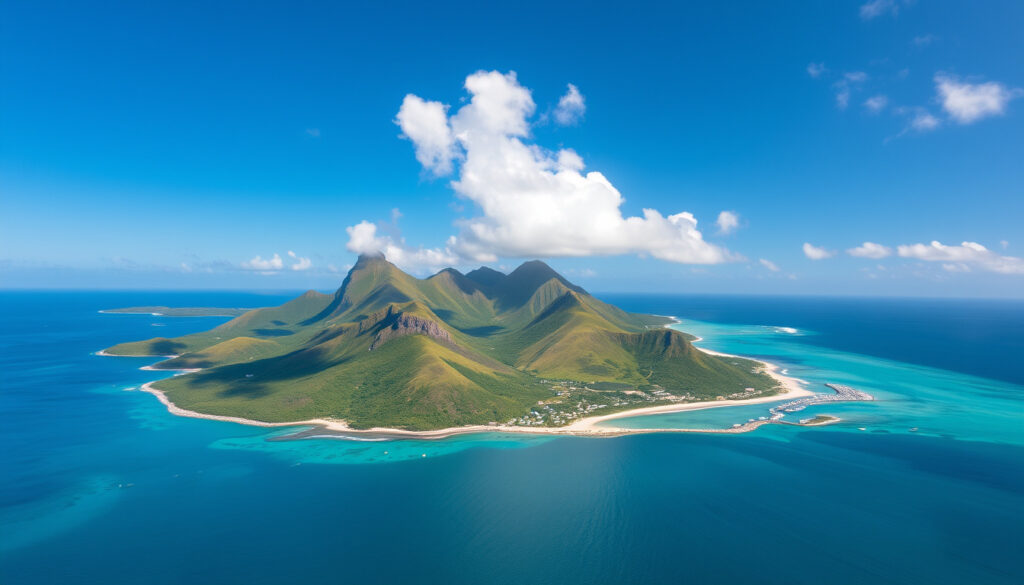
Few Caribbean islands pack as much personality into so small a space as St Kitts and Nevis. This two-island federation offers a blend of colonial history, relaxed beaches, and a distinct political identity—all wrapped in an area smaller than Barbados. Whether you are curious about safety, language, or how it stacks up against St Lucia, here is a grounded look at what this dual-island nation really offers travelers.
Capital: Basseterre · Population: ~48,000 · Area: 261 sq km (101 sq mi) · Official Language: English · Currency: Eastern Caribbean dollar (XCD) · Independence: 1983 from the United Kingdom
Quick snapshot
- Independent federation since 1983 (CIA World Factbook)
- English is the sole official language (Encyclopædia Britannica)
- Currency: Eastern Caribbean dollar (XCD) (IMF)
- Independence in 1983 after centuries of British rule (BBC)
- Government seeks to diversify economy beyond tourism and citizenship programs (World Bank)
Key facts
Eleven essential figures define St Kitts and Nevis at a glance.
| Label | Value |
|---|---|
| Official Name | Federation of Saint Kitts and Nevis |
| Capital | Basseterre |
| Largest City | Basseterre |
| Area | 261 sq km (101 sq mi) |
| Population | 47,606 (2023 estimate) |
| Official Language | English |
| Currency | Eastern Caribbean dollar (XCD) |
| Time Zone | UTC-4 (AST) |
| Drives on the | Left |
| Calling Code | +1-869 |
| Internet TLD | .kn |
The implication: In a region where small nations often get overshadowed, St Kitts and Nevis punches above its weight with a clear institutional identity.
What country does St Kitts belong to?
St Kitts and Nevis is an independent country
- St Kitts and Nevis is a sovereign federal state, not a territory or dependency of any other nation (CIA World Factbook).
- It gained full independence from the United Kingdom on 19 September 1983 (BBC).
- The country is a parliamentary democracy within the Commonwealth, with a Governor-General representing the British monarch as head of state (Government of St Kitts and Nevis).
Its continent is North America (Caribbean region)
Geographically, St Kitts and Nevis sits in the Leeward Islands of the Caribbean Sea, which is part of the continent of North America (Encyclopædia Britannica). The country is the smallest sovereign state in the Western Hemisphere by both area and population.
The pattern: Many travelers assume Caribbean islands belong to Europe or the United States; in reality, St Kitts and Nevis is as independent as Canada or Mexico.
Is Nevis part of the USA?
Nevis is one of two islands in the federation
- Nevis is the smaller of the two islands that together form the Federation of Saint Kitts and Nevis (Encyclopædia Britannica).
- It is not a U.S. territory, nor is it administered by the United States in any way (CIA World Factbook).
- All residents of Nevis are citizens of St Kitts and Nevis and carry its passport (Government of St Kitts and Nevis).
Historical ties with the United Kingdom, not the USA
Nevis was a British colony from the early 17th century until independence in 1983. The island attempted a secession from the federation in 1998, but a referendum fell short of the required two-thirds majority (BBC). The U.S. has no special legal relationship with Nevis other than standard diplomatic ties.
Why this matters: Confusion about Nevis often arises because its name resembles U.S. place names, but it is unequivocally a part of an independent Caribbean nation.
How Safe Is It to Visit Saint Kitts and Nevis?
Crime rates and common incidents
- The U.S. Department of State currently rates Saint Kitts and Nevis as Level 1: Exercise Normal Precautions (U.S. Department of State travel advisory).
- The Government of Canada reports that petty crime such as pickpocketing and purse snatching occurs, and violent crime such as armed robbery and sexual assault also occurs (Government of Canada travel advisory).
- The UK Foreign, Commonwealth & Development Office warns of incidents of serious crime including murder, armed robbery, and sexual assault (UK Government FCDO travel advice).
Safety tips for tourists
- Do not walk alone, especially at night, on beaches, or in isolated or poorly lit locations (U.S. Department of State).
- Only use licensed, clearly marked taxis; agree on the fare before departure because taxis are not metered (UK Government FCDO).
- Avoid isolated areas and unpatrolled beaches after dark (Government of Canada).
- Keep car doors locked while driving and do not stop if pedestrians try to flag down your vehicle (U.S. Department of State).
Why there are many murders in Saint Kitts and Nevis
The country’s murder rate has been above the Caribbean regional average in recent years, though official statistics can fluctuate. The U.S. Department of State notes that U.S. citizens are not specifically targeted (U.S. Department of State). Gang-related violence and drug trafficking are cited as underlying factors (BBC). The Government of Canada advises extra caution during holiday seasons and festivals when crime may increase (Government of Canada).
Tourist areas are generally safe during the day, but the risk rises sharply after dark. For visitors, the real danger is not violent crime but opportunistic theft—leave valuables in a safe, not on the beach.
Is St Kitts a wealthy country?
Economic overview
- The World Bank classifies St Kitts and Nevis as an upper-middle-income economy (World Bank country overview).
- GDP per capita stood at approximately $20,000 in 2023, among the highest in the Eastern Caribbean (World Bank data).
- Tourism and financial services are the main pillars, alongside a controversial citizenship-by-investment program (IMF country data).
Cost of living and tourism expenses
Visitors should expect moderate to high costs, especially on accommodation and dining. A meal at a mid-range restaurant costs around $20–35 USD, and hotel rates during peak season (December–April) can top $200 USD per night (Lonely Planet travel guide). US dollars are widely accepted but change is given in Eastern Caribbean dollars.
The catch: A high GDP per capita masks income inequality—many locals rely on tourism wages, while the citizenship program has attracted foreign capital that has pushed up real estate prices.
What language do they speak in St. Kitts?
Official language: English
English is the sole official language and is used in government, education, and media (Encyclopædia Britannica). Visitors will have no trouble communicating.
Local dialects and creole influences
Saint Kitts Creole, an English-based creole with African and French influences, is widely spoken in informal settings (Ethnologue language profile). While not a separate language, it can be challenging for first-time visitors to understand. No other official languages exist.
Why this matters: English proficiency is high, so travelers from the US, UK, and Canada will find it easy to get around and get help.
Is St. Lucia or St. Kitts better?
6 key differences, one pattern: St Lucia offers scale and luxury, St Kitts offers intimacy and ease.
| Attribute | St Kitts and Nevis | St Lucia |
|---|---|---|
| Area | 261 sq km | 617 sq km (CIA World Factbook) |
| Population | ~48,000 | ~180,000 |
| Number of major resorts | Fewer, more boutique | Many large all-inclusives |
| Tourist safety advisory (U.S.) | Level 1 | Level 2 (Exercise Increased Caution) (U.S. Department of State) |
| Landscape | Volcanic peaks, black sand beaches | Iconic Pitons, rainforest, waterfalls |
| Vibe | Quiet, relaxed, easy to explore | More active, more nightlife |
The trade-off: St Kitts feels less crowded and more manageable in a short trip, while St Lucia offers more variety in terrain and activities. Safety-wise, St Kitts has a lower official travel advisory from the U.S., though both require standard precautions.
Timeline: Key moments in St Kitts and Nevis history
- 1623 – English settlement on St Kitts begins, the first English colony in the Caribbean (Encyclopædia Britannica).
- 1783 – Treaty of Paris confirms British control after years of French-English conflict (BBC).
- 1967 – Becomes an associated state of the UK, gaining internal self-government (Commonwealth Secretariat).
- 1983 – Full independence from the United Kingdom (CIA World Factbook).
- 1998 – Nevis holds a secession referendum that fails to reach the required two-thirds majority (BBC).
- 2024 – Prime Minister Terrance Drew leads the government with a focus on economic diversification and crime reduction (Government of St Kitts and Nevis).
The pattern: The island’s history reflects a recurring tension between unity (with Britain, then within the federation) and local autonomy—a balance still visible today in the relationship between St Kitts and Nevis.
getgoldenvisa.com, tripadvisor.com, facebook.com, bb.usembassy.gov, aardy.com
For a more detailed look at safety and currency, check out this comprehensive St Kitts and Nevis travel guide.
Frequently asked questions
Do I need a visa to visit St Kitts and Nevis?
Citizens of the United States, Canada, the United Kingdom, and most European countries do not need a visa for stays up to 90 days (Ministry of Foreign Affairs of St Kitts and Nevis). Always check the latest requirements with your nearest diplomatic mission.
What is the best time to visit St Kitts and Nevis?
The dry season from December to April offers the best weather, with lower humidity and less rain. Hurricane season runs from June to November (UK Government FCDO).
Is it safe to drink tap water in St Kitts and Nevis?
Tap water is generally considered safe to drink in the main tourist areas, but many visitors opt for bottled water. The U.S. Centers for Disease Control and Prevention advises travelers to drink bottled or boiled water if unsure (CDC travel health notice).
What are the must-see attractions in St Kitts and Nevis?
Highlights include Brimstone Hill Fortress (a UNESCO World Heritage Site), the scenic St Kitts Scenic Railway, and the beaches of Nevis such as Pinney’s Beach (Lonely Planet).
Can I use US dollars in St Kitts and Nevis?
Yes, US dollars are widely accepted in hotels, restaurants, and shops. Change is given in Eastern Caribbean dollars. ATMs dispense XCD (UK Government FCDO).
Are there direct flights to St Kitts and Nevis from the USA?
Yes, direct flights from New York (JFK), Atlanta, Miami, and Charlotte are available on American Airlines, Delta, and United. The island also has international connections from Canada and the UK (SKN Vibes travel guide).
What is the citizenship by investment program in St Kitts and Nevis?
Launched in 1984, it is the world’s oldest citizenship-by-investment program. Applicants can obtain citizenship by contributing to the Sustainable Growth Fund (minimum $150,000) or investing in approved real estate (Henley Global specialist consultancy).
Related reading
- UK Emergency Alert System: Full Guide 2025 (safety emergency context)
- Weather in Blackpool Tomorrow – Hourly & 14-Day Outlook (weather planning parallel)
For the traveler weighing a Caribbean trip, the choice between St Kitts and St Lucia often comes down to what you want from a holiday. St Kitts and Nevis offers a lower-key, intimate experience with a fascinating political story and generally manageable safety risks. St Lucia delivers more scale and spectacle at the cost of higher tourist density and a slightly escalated travel advisory. For the North American visitor seeking a short escape with reliable English, easy direct flights, and a dose of history, the dual-island federation remains a strong, grounded option.

Oliver William Davies Thompson is a staff writer for MetroReport.uk, covering city news, transport, housing and urban policy. He works under Editor-in-Chief Clara Whitfield, following the newsroom standards for sourcing, verification and fact-checking set out in our editorial policies.