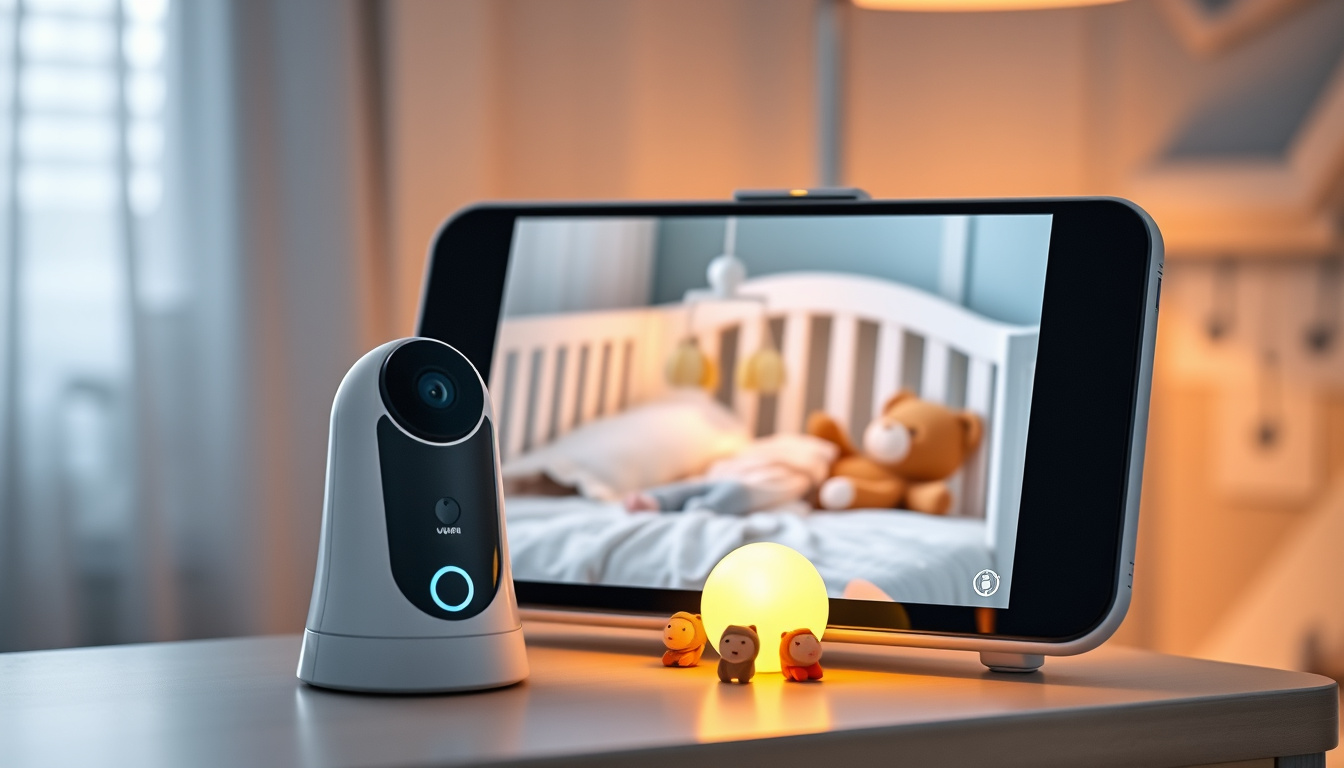
Choosing a baby monitor with camera means weighing video quality, smart features, and privacy concerns all at once. Parents today face an overwhelming array of options, from basic models to sophisticated systems with app connectivity, health sensors, and AI-driven alerts.
This guide cuts through the marketing noise to examine the leading monitors available in 2025. Whether you prioritize crystal-clear night vision, seamless app integration, or a closed system that never touches the internet, there is a solution designed for your household’s specific needs.
The right choice depends largely on how you plan to use the monitor, where you will be using it, and what level of data access feels comfortable for your family. Understanding your living space layout through resources like local play area guides can also help determine optimal camera placement as your child grows.
Best Baby Monitors with Camera
Four models consistently rise above the competition when evaluating the essential combination of video quality, reliability, and feature set.
- Nanit Pro — 1080p overhead view, sleep tracking, room monitoring, WiFi-enabled app
- Owlet Dream Duo 2 — 1080p camera paired with smart sock for oxygen and vitals tracking at $399
- Infant Optics DXR-8 Pro — 720p with exceptional noise reduction, no WiFi required, 500-foot range
- Google Nest Cam 2nd Gen — 1080p video, built-in security features, works with Alexa
The research points to several patterns that shape how parents should approach their decision. HD video has become the standard expectation rather than a premium feature, with 1080p resolution now common across most competing models. App-enabled monitors deliver unmatched convenience through remote viewing and smart notifications, but these benefits come with privacy trade-offs that some families find unacceptable.
Health monitoring capabilities remain a niche feature set, available primarily through the Owlet system. Two-way audio is nearly universal among current-generation monitors, removing what was once a differentiating capability. Parents should also factor in the ongoing cost of subscriptions, as several leading models require monthly fees to unlock full functionality.
| Feature | Why It Matters | Models That Deliver |
|---|---|---|
| Camera Resolution | 1080p provides clear detail for checking baby’s condition at night | Nanit Pro, Owlet Dream Duo 2, Google Nest Cam |
| Night Vision | Infrared capability lets you monitor without disturbing sleep | All premium models |
| Two-Way Audio | Speak to your baby without entering the room | Standard across leading monitors |
| App Connectivity | View feed remotely and receive smart alerts | Nanit Pro, CuboAi Plus Smart, Hubble Nursery Pal |
| Smart Alerts | AI-powered cry detection, face covering alerts, sleep analysis | CuboAi Plus Smart, Nanit Pro |
| Health Sensors | Track heart rate and oxygen alongside video | Owlet Dream Duo 2 exclusively |
Best Baby Monitors with Camera and App
App-enabled monitors represent the largest category of current-generation devices, offering remote viewing, push notifications, and increasingly sophisticated analytics. These models connect to your home WiFi network, letting you check on your baby from anywhere with an internet connection.
Leading App-Enabled Options
The Nanit Pro leads this category with its overhead mounting system that provides a bird’s-eye view of the crib. The companion app delivers sleep pattern tracking, room temperature readings, and humidity alerts. Parents receive morning summaries that break down sleep quality, helping identify patterns over time.
The CuboAi Plus Smart takes a different approach, using artificial intelligence to detect potential safety concerns. The system can identify face coverings that might obstruct breathing, alert parents to unsafe sleep positions, and distinguish between different types of sounds. These capabilities address worries that many parents experience during the early months.
App-enabled monitors store footage and data on manufacturer servers, raising legitimate questions about who can access that information. Before purchasing, review each company’s privacy policy, data retention practices, and whether two-factor authentication is available to protect your account.
Balancing Convenience Against Control
The appeal of checking on your baby from the kitchen or while traveling is obvious. Yet this convenience comes with network connectivity that theoretical hackers could exploit. Manufacturers have responded by adding encryption and security features, but no system is entirely immune from breach attempts.
Smart notifications represent the most useful app feature for many parents. Instead of listening for crying, you receive a push alert when sound is detected. Some systems like the CuboAi can differentiate between hunger cries, wet diaper sounds, and ambient noise, allowing you to prioritize your response accordingly.
Baby Monitors with Camera No WiFi
For parents who find internet connectivity unacceptable, no-WiFi monitors offer a fundamentally different architecture. These devices operate on closed radio frequencies, creating a direct link between the camera unit and your dedicated parent display without any network involvement.
The Infant Optics DXR-8 Pro Advantage
The Infant Optics DXR-8 Pro stands as the category leader, earning consistent praise for audio and video quality that rivals WiFi-dependent competitors. The closed-loop system means that no footage ever leaves your home, eliminating the attack surface that hackers would need to exploit.
With a rated range of up to 500 feet, most parents find adequate coverage for typical home layouts. The device can connect up to four separate cameras, letting you monitor multiple rooms from a single parent unit. This scalability makes the DXR-8 Pro suitable for larger homes or families with multiple children.
No-WiFi monitors operate on FHSS or DECT frequencies that generally penetrate walls better than WiFi signals. In testing, these systems often outperform WiFi-based monitors for range and reliability within the home, though they cannot match the anywhere-access capability that app connectivity provides.
When No WiFi Makes Sense
Travel families often favor no-WiFi monitors because they work immediately without configuring network settings. The plug-and-play nature removes setup friction in unfamiliar environments. Privacy-conscious parents similarly gravitate toward this category, reasoning that the most secure system is one that cannot connect to external networks.
The trade-off involves losing remote access entirely. You must be within range of the camera to receive the feed, which rules out checking on your baby while at work or traveling. For parents who spend significant time away from home, this limitation is difficult to accept.
Angelcare Baby Monitors with Camera
Angelcare occupies a distinct position in the market through its sensor pad technology combined with video monitoring. The brand built its reputation on movement detection systems designed to alert parents if breathing stops or slows dangerously.
Sensor Pad Integration
Unlike optical sensors that track movement through the camera lens, Angelcare monitors include a sensor pad that sits beneath the mattress. This pad detects the rise and fall of breathing through the mattress itself, providing an additional layer of monitoring that operates independently from the video feed.
The system sounds an alarm if no movement is detected for a configurable period, typically 20 seconds. This feature appeals strongly to parents of premature infants or those with respiratory concerns, though Angelcare is careful to position these monitors as parenting tools rather than medical devices.
Sensor pad monitors detect movement indirectly and cannot measure oxygen saturation, heart rate, or other vital signs. Parents should not rely on these systems as substitutes for medical monitoring equipment prescribed by healthcare providers.
Current Angelcare Offerings
The Angelcare AC1100 represents the brand’s video monitoring entry point, combining touchscreen parent unit with pan-tilt-zoom camera capability. Models in the premium tier add sensor pad compatibility for parents who want both video and movement monitoring in a single system.
Baby Monitors with Camera and Breathing Sensor
The most advanced health monitoring capabilities appear in a limited number of monitors that go beyond video to track physiological indicators. These systems represent the intersection of consumer technology and medical-grade monitoring, though they carry correspondingly higher price points.
Owlet Dream Duo 2 System
The Owlet Dream Duo 2 at $399 includes a smart sock that fits around the baby’s foot, continuously measuring heart rate, oxygen saturation, skin temperature, and sleep movements. The camera component streams video while the sock data appears alongside the feed in the companion app. For more information on upcoming game releases, check out the Slime Rancher 2 release date.
When oxygen levels fall outside the normal range or the heart rate triggers concern, the system sends immediate alerts to both the parent unit and connected smartphones. This dual-notification approach ensures that critical alerts reach parents regardless of which device they happen to be holding.
Understanding the Technology
Pulse oximetry, the technology measuring oxygen saturation, uses red and infrared light to determine how much oxygen the blood is carrying. The smart sock emits these wavelengths through the skin and measures the reflected light to calculate saturation percentage without needles or blood samples.
These monitors are not FDA-cleared medical devices and should not replace professional monitoring equipment for infants with diagnosed conditions. However, for parents seeking additional peace of mind, the combination of video and physiological tracking provides more information than video-only alternatives.
The Evolution of Baby Monitor Technology
Baby monitor technology has progressed through distinct phases that parallel broader consumer electronics trends.
- 1970s–1990s: Audio-only monitors using analog radio frequencies represented the first wave, letting parents hear crying from another room without keeping a constant vigil.
- 2000s: Video capability became affordable for mainstream consumers, adding visual confirmation to the audio link. Basic night vision arrived as an early improvement.
- 2010s: WiFi connectivity transformed monitors into networked devices, enabling remote viewing through smartphone apps and introducing the first smart notifications.
- 2020s: Health monitoring entered the consumer market through pulse oximetry and movement detection, while AI-powered features like cry detection and sleep analysis became standard in premium models.
Understanding WiFi Risks Versus Non-WiFi Reliability
| Established | Uncertain or Context-Dependent |
|---|---|
| WiFi monitors allow remote viewing from anywhere with internet access | Actual security risk level depends on individual manufacturer implementation |
| Non-WiFi monitors never connect to external networks | Long-term reliability data varies by manufacturer and model |
| Closed-loop systems cannot be accessed remotely by definition | Frequency interference potential in densely populated areas remains poorly documented |
| App-enabled monitors store footage on manufacturer servers | Data breach likelihood differs across companies based on their security practices |
Choosing the Right Monitor for Your Situation
Different household configurations call for different solutions. Apartment dwellers who never travel benefit most from feature-rich app-enabled systems that maximize convenience within their living space. Families with older children who occasionally visit grandparents need the flexibility of no-WiFi portability without sacrificing video quality.
Parents of premature infants or those with respiratory conditions may find health monitoring capabilities essential rather than nice-to-have. Budget-conscious families often discover that mid-range no-WiFi options provide better value than entry-level smart monitors when they do not need app connectivity.
Long-term flexibility matters for parents who expect their monitoring needs to evolve. Some families begin with basic monitoring and upgrade to smart features as their child grows, while others find that their initial purchase serves them through multiple children without requiring replacement.
“The DXR-8 Pro delivers the kind of reliability that parents actually need during those early months when sleep deprivation is at its worst. When you need the monitor to work without question, a closed system never lets you down.”
“The Nanit sleep tracking data genuinely helped us understand our son’s patterns and identify what was waking him at 3am. Worth every penny for the insights alone, independent of the video quality.”
Summary and Next Steps
The baby monitor market offers solutions for every priority and threat model. App-enabled monitors like the Nanit Pro and CuboAi Plus Smart deliver sophisticated analytics and remote access for parents who value convenience. Closed systems like the Infant Optics DXR-8 Pro provide uncompromising privacy for families concerned about data security. Health-focused options like the Owlet Dream Duo 2 add physiological monitoring for those who want more information about their infant’s condition.
For families planning their living spaces, consider how a dedicated play area might influence your monitoring needs as your child grows. Understanding the local context through guides like the Snakes and Ladders Abingdon Guide can also help when evaluating neighborhood safety considerations alongside your monitoring strategy.
Before purchasing, verify current pricing across retailers, confirm that the app is compatible with your smartphone, and check whether subscription fees apply for features you intend to use.
What is the best baby monitor with camera?
The Nanit Pro earns the designation of best overall based on its combination of 1080p video quality, sleep tracking analytics, and app reliability. The Infant Optics DXR-8 Pro ranks as the best privacy-focused option due to its closed-loop system that never connects to WiFi.
Do baby monitors with cameras need WiFi?
No. WiFi connectivity is optional on most models. No-WiFi monitors like the Infant Optics DXR-8 Pro operate on dedicated radio frequencies, providing video feeds only to the included parent unit without network access.
Can baby monitors with cameras be hacked?
Any networked device carries some hacking risk, and WiFi-enabled baby monitors are no exception. No-WiFi monitors cannot be hacked remotely because they do not connect to networks. For WiFi models, choose devices with strong encryption, enable two-factor authentication where available, and change default passwords.
What features should I prioritize in a baby monitor?
Video resolution of at least 720p, reliable night vision, and two-way audio represent the foundational features worth expecting at any price point. App connectivity, health sensors, and AI alerts become relevant differentiators only after confirming these basics meet your standards.
How far can baby monitor signals reach?
No-WiFi monitors typically advertise 500-foot ranges, with the Hubble Nursery Pal Deluxe reaching 1000 feet. WiFi-enabled monitors work wherever you have internet access, removing range limitations entirely at the cost of requiring network connectivity.
Are breathing sensor monitors worth the extra cost?
The Owlet Dream Duo 2 at $399 includes the most comprehensive health monitoring available in a consumer baby monitor. Whether the cost is justified depends on your specific situation. Parents of premature infants or those with respiratory concerns often find the investment worthwhile. For healthy full-term babies, the utility becomes more subjective.
Do baby monitor apps store footage permanently?
Storage practices vary by manufacturer. Some services offer cloud recording with subscription fees, while others store footage temporarily for live viewing only. Review the privacy policy before purchasing to understand exactly what data is captured, how long it is retained, and who can access it.

Oliver William Davies Thompson is a staff writer for MetroReport.uk, covering city news, transport, housing and urban policy. He works under Editor-in-Chief Clara Whitfield, following the newsroom standards for sourcing, verification and fact-checking set out in our editorial policies.