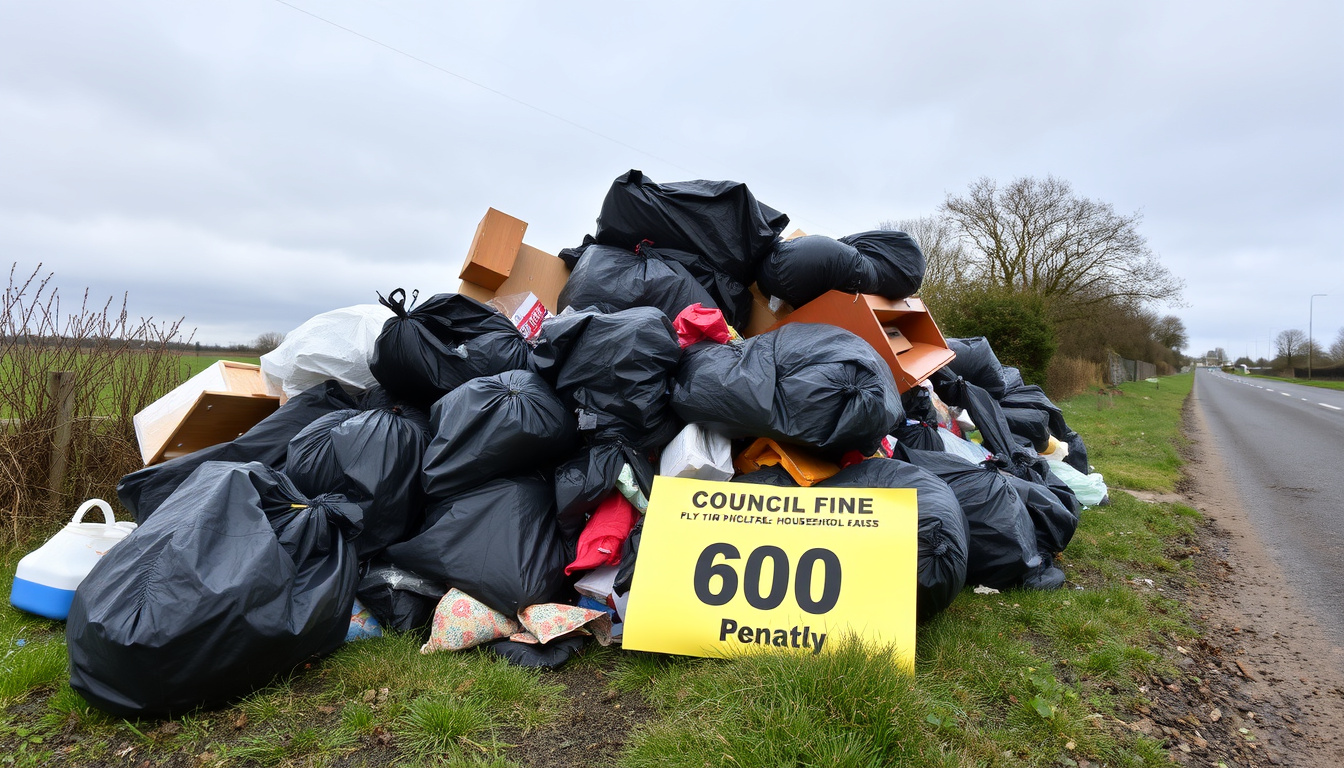
An 83-year-old pensioner from Reading has been issued a £600 fixed penalty notice by Reading Borough Council after a cardboard box bearing her address was found beside an overflowing recycling bin. The case has reignited national debate about council enforcement practices, the treatment of vulnerable residents, and the boundaries of fly tipping legislation.
Carole Wright, who maintains she placed the cardboard box inside the recycling bin rather than beside it, received the penalty under Section 34ZA of the Environmental Protection Act 1990. The enforcement action, carried out by the council’s private contractor Kingdom, has drawn criticism from advocacy groups and prompted questions about whether existing penalties adequately account for circumstances involving elderly or vulnerable individuals.
The family has reported significant distress resulting from the fine, with Mrs. Wright’s daughter expressing concern about her mother’s health and ability to pay. As of late January 2026, no formal appeal had been submitted to the council, though officials have indicated they remain open to dialogue.
What is the fly tipping fine for Carole Wright?
- Carole Wright is an 83-year-old pensioner from Reading who received a £600 fine for fly tipping
- A cardboard box bearing her address was photographed beside an overflowing recycling bin
- Reading Borough Council’s private contractor Kingdom handled the enforcement
- Mrs. Wright claims she placed the box inside the bin, not beside it
- No response to a 30-day information request led to the penalty being issued
- The family reported the situation caused significant health distress
- No formal appeal had been submitted as of January 22, 2026
| Fact | Details |
|---|---|
| Name | Carole Wright |
| Age | 83 years old |
| Residence | Reading, Berkshire |
| Fine Amount | £600 Fixed Penalty Notice |
| Enforcement Body | Reading Borough Council via Kingdom contractor |
| Violation | Waste found beside recycling bin |
| Legal Provision | Section 34ZA Environmental Protection Act 1990 |
| Incident Date | October 2025 |
Who is Carole Wright and what happened in her case?
The Individual
Carole Wright is an 83-year-old pensioner residing in Reading, Berkshire. According to her daughter Catherine, Mrs. Wright has experienced significant distress since receiving the fixed penalty notice. Catherine has described her mother’s declining health and expressed serious concerns about the family’s ability to pay the £600 fine.
Mrs. Wright reportedly feared imprisonment as a result of the penalty, a reaction that her daughter attributed to the stress of the situation rather than any explicit threat communicated by authorities. The family initially suspected the enforcement letters might be a scam, a belief that persisted until they received official confirmation from Reading Borough Council.
The Incident at Milestone Centre
The incident occurred in October 2025 at the Milestone Centre in Reading. Mrs. Wright maintains she placed a cardboard box inside the recycling bin, but a photograph taken by Kingdom, the council’s private enforcement contractor, showed the box positioned outside an overflowing bin.
Under Reading Borough Council’s enforcement rules, leaving waste beside a recycling bin rather than inside it is classified as fly tipping. The cardboard box bore Mrs. Wright’s address, which allowed Kingdom to identify her as the source of the waste.
The Enforcement Sequence
The enforcement process followed a structured sequence. Kingdom first identified the cardboard box as fly-tipped waste and used the identifying information found on the box to trace it to Mrs. Wright’s address. A letter was subsequently sent requesting further information within a 30-day period.
When no response was received within the deadline, Reading Borough Council authorized the issuance of the £600 fixed penalty notice. Council officials emphasized that the fine was not immediate and resulted from a multi-step procedural process. However, the council directed queries to Kingdom rather than providing direct guidance on the case.
Reading Borough Council stated that residents had consistently raised concerns about littering and fly tipping in the area, making enforcement a local priority. The council has contracted private firms like Kingdom to investigate and act on waste-related offences under specific protocols.
What is fly tipping and what are the penalties in the UK?
Legal Definition
Fly tipping is legally defined as disposing of waste on public or private land without the necessary permission or a valid licence. This offence applies to individuals and businesses alike, with local authorities empowered to investigate incidents and take enforcement action against those responsible.
The definition encompasses a wide range of behaviours, from small-scale dumping of household items to large-scale commercial waste disposal. What distinguished Mrs. Wright’s case was the classification of waste found beside a bin rather than inside it, which falls under local authority enforcement guidelines for residential areas.
Penalty Structure
The UK fly tipping penalty structure operates on multiple levels, with Fixed Penalty Notices representing the most common enforcement tool for local authorities. Councils can issue FPNs ranging from £150 to £1,000 for fly tipping offences, with the specific amount determined by local policies and the severity of the violation. Government guidance on Fixed Penalty Notices provides additional context for residents facing such penalties.
Beyond fixed penalties, the legal consequences become more severe for escalated cases. Magistrates’ Courts can impose fines reaching £50,000, while Crown Court proceedings carry unlimited fine potential. Those convicted may also face imprisonment for up to five years or community service orders.
Vehicle confiscation represents another enforcement mechanism, with authorities empowered to seize or permanently destroy vehicles used in illegal dumping operations. This provision particularly targets commercial operators who engage in large-scale waste disposal without proper licensing.
Littering and household waste breaches carry separate, lower penalties. Littering offences typically result in fines between £80 and £150, while household waste breaches range from £200 to £600. Fly tipping offences, as in Mrs. Wright’s case, can reach £600 or higher depending on the local authority’s approach.
Distinction from Other Offences
It is important to distinguish fly tipping from other waste-related offences. Littering typically involves smaller items discarded in public spaces, whereas fly tipping refers to larger quantities of waste deposited without permission. Household waste breaches concern failures to comply with collection schemes, such as placing incorrect materials in bins.
Can fly tipping fines like Carole Wright’s be appealed?
The Appeal Process
Appeals against fly tipping fines are possible, though they typically require evidence of mitigating circumstances. In Mrs. Wright’s case, Reading Borough Council has stated it remains open to dialogue, but as of January 22, 2026, no formal appeal or supporting documentation had been received from the family.
To challenge a fixed penalty notice, residents generally need to submit compelling evidence that either questions the identification of the waste source or demonstrates extenuating circumstances. The burden of proof rests with the individual contesting the penalty.
Types of Supporting Evidence
Those wishing to appeal a fly tipping fine may submit several categories of evidence. Photographic evidence demonstrating proper disposal practices can be valuable, particularly if it contradicts the council’s documentation. Witness statements from individuals who observed the disposal can also support an appeal.
For vulnerable individuals such as Mrs. Wright, medical evidence documenting health conditions can strengthen an appeal by demonstrating limited capacity or special circumstances. Catherine Wright explained that her family was asked to provide medical documentation to support her mother’s condition but did not have suitable records readily available.
Vulnerable individuals who receive fly tipping fines should contact the council directly, provide medical documentation where possible, and seek advocacy through local councillors, Members of Parliament, or legal aid services. Citizens Advice offers free guidance that may prove helpful in these situations. Legal advice may be beneficial in complex cases.
Alternatives to Formal Appeal
Beyond formal appeals, individuals may explore other avenues for resolving disputed fines. Local councillors can act as advocates, raising concerns directly with council officers on behalf of constituents. MPs offer similar support through parliamentary channels, particularly in cases involving vulnerable residents.
Citizens Advice Bureau and legal aid services provide free guidance on challenging enforcement actions. These organisations can help residents understand their rights and develop appropriate responses to fixed penalty notices.
Timeline of the Carole Wright Case
The following chronological sequence outlines the key events in the Carole Wright fly tipping enforcement case:
- October 2025: A cardboard box bearing Carole Wright’s address is discovered beside an overflowing recycling bin at the Milestone Centre in Reading. A photograph is taken by Kingdom, the council’s private enforcement contractor.
- Following days: Kingdom identifies the waste as fly-tipped material and traces it to Mrs. Wright’s address using the information on the cardboard box.
- Within 30 days: An information request letter is sent to Mrs. Wright requesting further details about the incident. No response is received within the specified period.
- After deadline: Reading Borough Council authorises the issuance of a £600 Fixed Penalty Notice under Section 34ZA of the Environmental Protection Act 1990.
- Post-notification: Mrs. Wright’s daughter Catherine reports the family initially believed the enforcement letters were a scam until official confirmation arrived from the council.
- January 2026: The case gains national media attention. Catherine Wright publicly expresses concerns about her mother’s health and ability to pay. Reading Borough Council confirms no formal appeal has been received.
What is confirmed and what remains unclear?
- Carole Wright is an 83-year-old resident of Reading
- A £600 fixed penalty notice was issued by Reading Borough Council
- The incident occurred at the Milestone Centre in October 2025
- A cardboard box bearing Mrs. Wright’s address was found beside a recycling bin
- The enforcement was carried out by Kingdom, the council’s private contractor
- The penalty was issued under Section 34ZA of the Environmental Protection Act 1990
- Mrs. Wright claims she placed the box inside the bin
- No formal appeal had been submitted as of January 22, 2026
- Whether Mrs. Wright actually received and read the initial information request letter
- The precise nature of any communication difficulties or health issues affecting Mrs. Wright at the time
- Whether the recycling bin was indeed overflowing at the time of the incident
- Whether Kingdom’s protocols adequately account for potentially vulnerable individuals
- The council’s specific criteria for issuing fines versus issuing warnings in similar cases
- Whether any comparable cases in Reading have received different treatment
- Whether the family sought advice before the deadline expired
Context: UK Fly Tipping Enforcement Practices
The Carole Wright case illuminates broader tensions within UK waste enforcement policy. Local authorities across the country employ private contractors to identify and prosecute fly tipping offences, with mixed results in terms of public perception. Reading Borough Council’s decision to use Kingdom, a commercial enforcement firm, reflects a wider trend of outsourcing regulatory functions.
These arrangements have generated debate. Supporters argue that private contractors increase enforcement capacity and reduce costs for cash-strapped councils. Critics suggest that profit-driven enforcement may prioritise penalty issuance over proportionality, particularly when vulnerable individuals are involved.
The case has also highlighted gaps in support for elderly residents navigating complex regulatory systems. Mrs. Wright’s reported fear of imprisonment, combined with the family’s initial dismissal of enforcement letters as potential scams, suggests communication barriers that existing processes may not adequately address. Fly tipping legislation and its application to individual cases continues to raise questions about balance between enforcement and compassion.
The council stated that residents have consistently raised concerns about littering and fly tipping in the area, making enforcement a local priority.
— Reading Borough Council statement
She keeps saying she’s going to go to prison. I can’t keep reassuring her that this isn’t going to happen.
— Catherine Wright, daughter
Summary
Carole Wright’s £600 fly tipping fine has become a focal point for discussions about council enforcement practices and their impact on vulnerable residents. The 83-year-old pensioner maintains she properly disposed of a cardboard box, while Reading Borough Council’s contractor documented it beside an overflowing bin. As of late January 2026, the fine remains unpaid and no formal appeal has been lodged, though officials indicate the council remains open to dialogue. The case raises important questions about how enforcement agencies balance environmental protection with proportionality when dealing with elderly individuals who may face barriers to navigating complex regulatory processes.
For those seeking guidance on waste disposal, consulting local resources such as B&Q Reading – Opening Hours, Address, Phone and Services can provide practical information about proper disposal options in the Reading area.
Frequently Asked Questions
How do councils identify who deposited fly tipping waste?
Councils and their contractors identify fly tipping sources through evidence found at the scene, including identifying documents, address details on waste items, witness information, or photographic evidence linking waste to specific individuals.
What should I do if I receive a fly tipping fine?
If you receive a fly tipping fine, you should respond within the specified timeframe, gather evidence supporting your case, and consider seeking advice from Citizens Advice, a local councillor, or legal aid services before deciding whether to pay or appeal.
Can elderly or vulnerable individuals receive leniency for fly tipping fines?
While there is no automatic exemption for elderly or vulnerable individuals, councils may consider mitigating circumstances when reviewing fines. Submitting medical evidence and seeking advocacy support can strengthen a case for reduced penalties.
What happens if I ignore a fly tipping Fixed Penalty Notice?
Ignoring a Fixed Penalty Notice typically leads to escalation. The council may pursue court action, resulting in larger fines, legal costs, or in serious cases, criminal prosecution with potential imprisonment.
How can I report fly tipping in my area?
Fly tipping can be reported to your local council’s environmental health or waste enforcement department. Many councils offer online reporting forms, phone helplines, or mobile apps for reporting incidents.
What evidence is needed to appeal a fly tipping fine?
Useful evidence for appealing includes photographic documentation, witness statements, proof of proper waste disposal practices, and any relevant medical or personal circumstances that affected your ability to comply with disposal requirements.
Are private enforcement contractors regulated?
Private enforcement contractors operate under council oversight and must follow established protocols. However, specific regulatory requirements vary by local authority and contract terms.

Oliver William Davies Thompson is a staff writer for MetroReport.uk, covering city news, transport, housing and urban policy. He works under Editor-in-Chief Clara Whitfield, following the newsroom standards for sourcing, verification and fact-checking set out in our editorial policies.