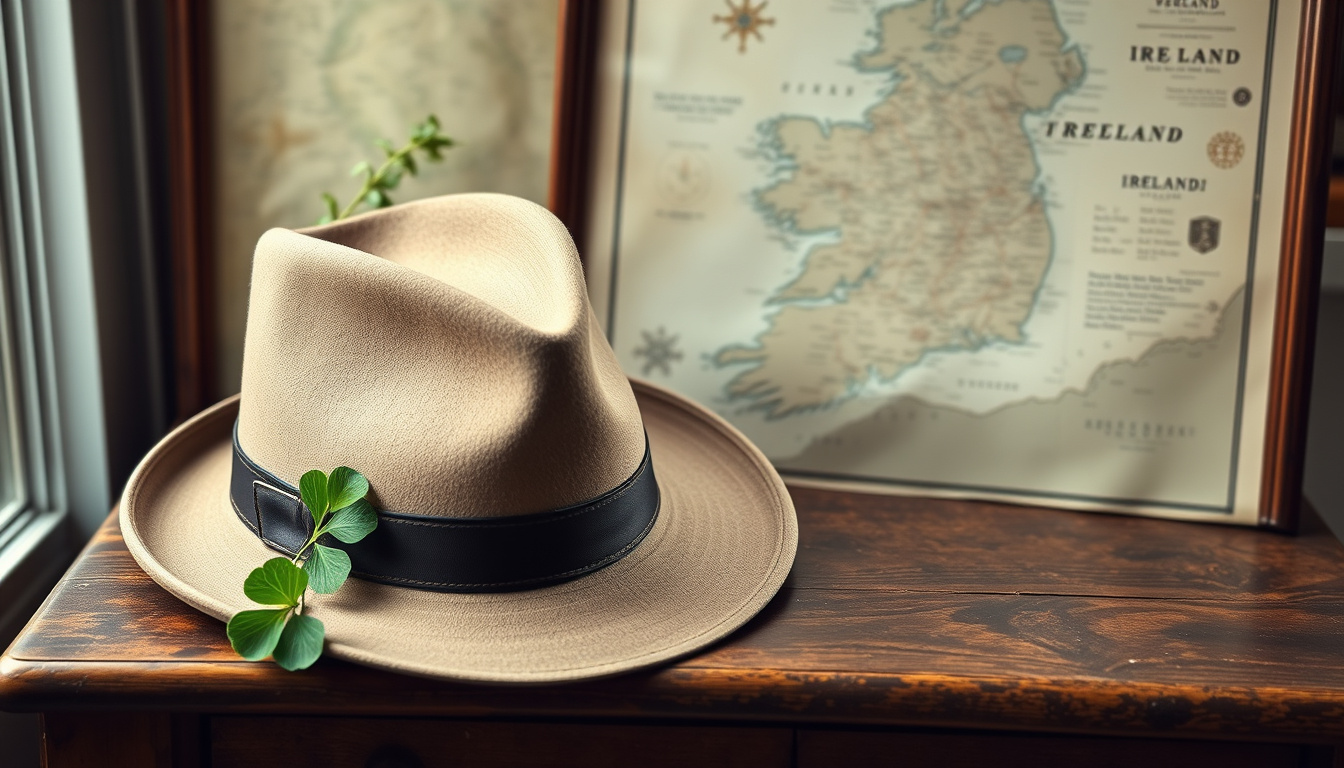
You might think the fedora is just a Hollywood prop, but its history starts on a Paris stage in 1882 and ends in an Irish wardrobe. This classic headpiece has a clear identity that sets it apart from the trilby, a surprisingly practical place in a damp climate, and a story that every buyer should know before clicking ‘add to cart’.
Origin Year: 1891 ·
Typical Crown Height: 4-6 inches ·
Brim Width Range: 2.5-3.5 inches ·
Common Materials: wool felt, fur felt, straw ·
Notable Wearers (historical): Edward VIII, Frank Sinatra, Harrison Ford
Quick snapshot
- Name originates from Victorien Sardou’s 1882 play “Fédora” (Wikipedia (general reference))
- Typical crown height 4–6 inches; brim 2.5–3.5 inches (Gentleman’s Gazette (men’s style publication))
- Commonly made from wool felt, fur felt, or straw (Hicks & Brown (hat retailer & style guide))
- Exact date when the fedora fully transitioned from women’s to men’s fashion remains unconfirmed (Wikipedia (historical notes))
- No single documentary source records the first use of “fedora” for a man’s hat (Hat Realm (hat history blog))
- The exact origin year is debated between 1882 (play) and 1891 (some style guides) (Gentleman’s Gazette (fashion history))
- 1882: Play “Fédora” opens in Paris (Wikipedia (theatrical history))
- 1920s: Men adopt fedora as everyday hat (Gentleman’s Gazette (fashion history))
- 2000s–present: Revival as vintage style icon (Hats in the Belfry (retail blog))
- Growing interest in fedoras among Irish buyers due to vintage fashion trends (Hatstore.ie (Irish retailer))
- More brands offering waterproof or water-resistant fedoras for Ireland’s wet climate (Outdoor & Country (Irish outdoor retailer))
Here are the key dimensions and availability details for the fedora in Ireland.
| Attribute | Value |
|---|---|
| First introduced | 1882 on stage in Paris |
| Peak popularity | 1940s–1950s |
| Irish availability | Hatstore.ie, Ballybar Ireland, Dunnes Stores |
| Common material | Wool felt, fur felt, straw |
| Typical retail price (Ireland) | €30–€120 |
What does a fedora hat symbolize?
Symbolism in film and pop culture
- Mystery and sophistication: The fedora is the hat of choice for film noir detectives and shadowy anti-heroes. It projects an air of secrecy and intelligence. According to Gentleman’s Gazette (men’s style authority), the fedora’s pinched crown and brim options allow wearers to convey different moods—snapped down means business, tilted up signals confidence.
- Rebellion and classic masculinity: From jazz musicians in the 1940s to modern indie-rock frontmen, the fedora signals a deliberate, slightly rebellious style choice. Hicks & Brown (hat specialists) note that the fedora is less about following trends and more about owning a signature look.
Historical associations with style and authority
- Political and cultural icons: Edward VIII popularised the fedora among British elites in the 1920s and 1930s. Wikipedia (historical fashion records) notes that the hat became synonymous with the well-dressed gentleman through the mid-20th century.
- Gender crossover: Originally a women’s accessory, the fedora crossed over to men’s fashion in the 1920s and now is worn by all genders. Hat Realm (hat culture blog) describes this transition as one of the few fashion shifts where a garment moved from feminine to masculine and retained its elegance.
The implication: the fedora’s symbolism is rooted in its ability to project both mystery and confidence—a rare combination in fashion.
Why do they call it a fedora hat?
Origin of the name from a 19th-century play
- Play “Fédora” (1882): The name comes directly from Victorien Sardou’s melodrama “Fédora,” which premiered in Paris. Actress Sarah Bernhardt wore a soft, brimmed hat on stage, and the style was dubbed “fedora” after the play’s title character. Wikipedia (etymology section) confirms this origin story.
- Early adopters: Women in the 1880s and 1890s embraced the hat as a fashionable accessory. Gentleman’s Gazette (fashion history) notes that within a decade, the fedora was a staple in women’s wardrobes across Europe and America.
Evolution from women’s accessory to men’s fashion staple
- 1920s shift: Men began wearing fedoras as everyday headwear, and by the 1930s the hat was firmly associated with male professionalism. Hicks & Brown (hat retailers) observe that the fedora’s adoption by Hollywood stars like Clark Gable cemented its masculine image.
- Modern unisex status: Today the fedora is worn by people of all genders. Brixton Europe (lifestyle brand) describes the fedora as a versatile accessory that works across style tribes, from vintage enthusiasts to contemporary professionals.
The pattern: the fedora’s name bridges 19th-century theatre and 21st-century street style—a lineage few accessories can claim.
Who typically wears a fedora?
Modern wearers across genders and styles
- Vintage enthusiasts and jazz scene regulars: The fedora is a cornerstone of vintage fashion. Hats in the Belfry (retail blog) reports that fedora sales spike around jazz festivals and retro-themed events.
- Creative professionals and entrepreneurs: Some entrepreneurs and artists adopt the fedora as a signature look. Hat Realm (style commentary) notes that in Dublin and Cork, fedoras are spotted at design studios and independent coffee shops.
Cultural and professional contexts
- Formal and semi-formal events: Weddings, races, and garden parties often see fedoras on both men and women. Gentleman’s Gazette (etiquette guide) advises that a fedora is appropriate for semi-formal dress codes when matched with a blazer or suit.
- Religious and cultural associations: Some Orthodox Jewish men wear black fedoras as part of their daily attire. Wikipedia (cultural significance) documents this tradition, which continues in communities including those in Dublin and Belfast.
What this means: the fedora crosses subcultures and contexts—from jazz clubs to synagogues—making it one of the most adaptable hats in modern dress.
What hat is mistaken for a fedora?
Trilby vs fedora: key differences
Two common brimmed hats, one frequent mix-up. The differences are clear once you measure the brim.
| Feature | Fedora | Trilby |
|---|---|---|
| Brim width | 2.5–3.5 inches (wide, can be snapped) | 1–2 inches (narrow, often turned up at back) |
| Crown height | 4–6 inches (taller, pinched in front) | 3–4 inches (shorter, often pointier) |
| Typical material | Felt (wool, fur) or straw | Felt (often lighter weight) |
| Sun protection | Good (wide brim) | Minimal (narrow brim) |
| Typical styling | Snapped down front, tilted or flat | Worn far back on head, tilted up |
| Year introduced | 1882 (play “Fédora”) | 1894 (play “Trilby”) |
Other similar hat styles
- Homburg: A stiff felt hat with a dented crown but a rolled brim. Hicks & Brown (hat experts) distinguish it from the fedora by the homburg’s outward-curled brim and firmer structure.
- Panama hat: A straw hat with a brim, but lacks the pinched crown. Hats in the Belfry (retail blog) notes that panama hats are often misnamed fedoras because of their similar silhouette.
The catch: the trilby’s narrow brim offers far less weather protection—a real drawback for Irish buyers.
Is it okay to wear a fedora?
Modern etiquette and confidence rules
- Do wear it outdoors, not indoors: Traditional etiquette says hats come off inside homes, restaurants, and churches. Gentleman’s Gazette (etiquette guide) reinforces this rule for fedoras.
- Do not wear it with overly casual clothes: A fedora pairs best with jeans and a blazer, a dress, or a suit. Brixton Europe (style blog) warns that joggers and hoodies clash with the fedora’s formal roots.
Styling do’s and don’ts
- Do tilt it slightly: A fedora should sit just above the eyebrows, tilted a little. Hats in the Belfry (fitting guide) recommends a 10–15 degree tilt for a natural look.
- Don’t wear the brim all the way back: That is the trilby’s territory. Brixton Europe (style blog) notes that wearing a fedora too far back on the head makes it look like a costume.
Upsides
- Adds instant character to an outfit
- Wide brim offers real rain and sun protection
- Suitable for both men and women
- Can be worn with semi-formal and smart-casual attire
Downsides
- Not appropriate for all casual contexts (e.g., sportswear)
- Can be tricky to pack without damaging the crown
- In Ireland’s wind, may require a hat clip or tighter fit
- Some people may associate it with outdated “fedora guy” stereotypes
How to wear a fedora correctly — step by step
- Choose the right size: The hat should sit snugly but not leave a red mark. Hicks & Brown (fitting advice) recommends measuring your head circumference before ordering online.
- Pick a colour for versatility: Charcoal, brown, or navy work with most wardrobes. American Hat Makers (brand) suggests a mid-grey fedora as the “most wearable” for men in Ireland.
- Shape the brim: A fedora can be worn snapped down front and up back, or flat. Hats in the Belfry (how-to guide) advises using steam to reshape felt brims without damage.
- Add a hat band that suits you: Many fedoras come with a grosgrain band; you can swap it for a leather or tartan band for a personal touch. Irish retailers like Ballybar Ireland (hat shop) offer custom band options.
- Practice confidence: Wear it for a few short outings first. Gentleman’s Gazette (style coach) notes that the hat’s effect depends on how naturally you carry it.
What this means: the fedora is not a hat you throw on—it rewards deliberate styling and a bit of bravery.
Timeline: The fedora hat through history
Six key moments trace the fedora’s journey from stage prop to modern wardrobe staple.
- 1882: Play “Fédora” opens in Paris; hat appears on stage. (Wikipedia (theatrical history))
- 1890s–1910s: Fashionable women’s accessory across Europe and America. (Gentleman’s Gazette (fashion history))
- 1920s: Men adopt fedora as everyday hat; fedora becomes a symbol of the “Roaring Twenties.” (Hicks & Brown (hat retailers))
- 1930s–1940s: Golden age of the fedora – worn by film stars like Humphrey Bogart and politicians like Franklin D. Roosevelt. (Wikipedia (cultural milestones))
- 1950s: Decline begins with the rise of casual dress codes and the hatless generation. (Hat Realm (fashion trends))
- 2000s–present: Revival as vintage style icon in pop culture, worn by celebrities and fashion influencers. (Brixton Europe (lifestyle brand))
The pattern: the fedora’s history mirrors the 20th century’s shift from formal to casual dress—and its recent revival proves that classic style never truly dies.
Confirmed facts vs what’s unclear
Confirmed facts
- Fedora name originates from 1882 play “Fédora” (Wikipedia (source))
- Typical crown height 4–6 inches, brim 2.5–3.5 inches (Gentleman’s Gazette (style guide))
- Usually made from felt (wool or fur) or straw (Hicks & Brown (retailer))
What’s unclear
- Exact date when fedora fully transitioned from female to male fashion (Hat Realm (analysis))
- Which single documentary source first used the term for men’s hats (Wikipedia (etymology notes))
- Whether the first fedora appeared in 1882 or 1891—the play date vs. the year some style guides cite (Gentleman’s Gazette (fashion history))
What this means: historians agree on the basic story, but the precise timeline of the fedora’s gender crossover remains fuzzy—making it a hat with a deliberately mysterious past.
Quotes from style experts
A fedora is a hat with a soft brim and indented crown.
Wikipedia (general reference article)
The fedora is a snap-brim hat with 4–6 inch crown and 2.5–3.5 inch brim.
Gentleman’s Gazette (men’s style guide)
The fedora’s identity is rooted in its proportions: a wide brim, a tall pinched crown, and the freedom to shape the brim as you like. For Irish buyers, the wider brim is a practical advantage—it shields your face from sideways rain better than a trilby ever could. Style guides from Brixton Europe (lifestyle brand) confirm that fedoras are considered more versatile than trilbies, working with raincoats and wool suits alike. For the buyer in Dublin or Cork, the choice is simple: fedora for coverage and classic style, trilby for a lighter, more casual look that offers less protection from the elements.
dapperfam.com, youtube.com, nimble-made.com, fashionablehats.com, hatsunlimited.com, youtube.com, singaporereport.net
For those looking to buy one, a detailed guide on how to choose and style a fedora offers practical tips for 2025.
Frequently asked questions
Can you wear a fedora in the rain?
Yes, but check the material. Wool felt fedoras handle light rain well; fur felt is even more water-resistant. Straw fedoras should stay dry. Hats in the Belfry (care guide) recommends a water-repellent spray for felt hats in Irish weather.
What is the best fedora brand?
Popular brands available in Ireland include Borsalino, Stetson, and Christys’ London. Hatstore.ie (Irish retailer) stocks several options from €40 to €120.
Are fedoras out of style?
No—they are a classic piece that cycles in and out of trend. Gentleman’s Gazette (style commentary) notes that the fedora is less about trend and more about timeless statement.
How should a fedora fit?
It should sit about one finger’s width above your ears and not slide forward. Hicks & Brown (fitting guide) advises measuring your head circumference with a soft tape.
Can a woman wear a fedora?
Absolutely. The fedora was originally a woman’s hat, and many female icons—from Marlene Dietrich to modern fashion bloggers—have worn it. Brixton Europe (style blog) includes styling tips for women.
What is a fedora hat made of?
Wool felt, fur felt (usually rabbit or beaver), or straw. American Hat Makers (manufacturer) explains that fur felt is lighter and more durable than wool.
For the Irish shopper weighing up a fedora vs a trilby, the decision comes down to climate and occasion. The fedora’s wider brim and taller crown offer better rain coverage and a more formal silhouette—ideal for a wet Wednesday in Galway or a wedding in Wicklow. The trilby is a warmer-weather accent. If you buy online from an Irish retailer like Hatstore.ie (local stockist), measure your head, choose a wool or fur felt, and pick a neutral colour. For the buyer in Dublin, the choice is clear: the fedora fits Ireland’s grey skies and won’t blow off in a gust. It is the practical hat that also makes a statement.

Oliver William Davies Thompson is a staff writer for MetroReport.uk, covering city news, transport, housing and urban policy. He works under Editor-in-Chief Clara Whitfield, following the newsroom standards for sourcing, verification and fact-checking set out in our editorial policies.