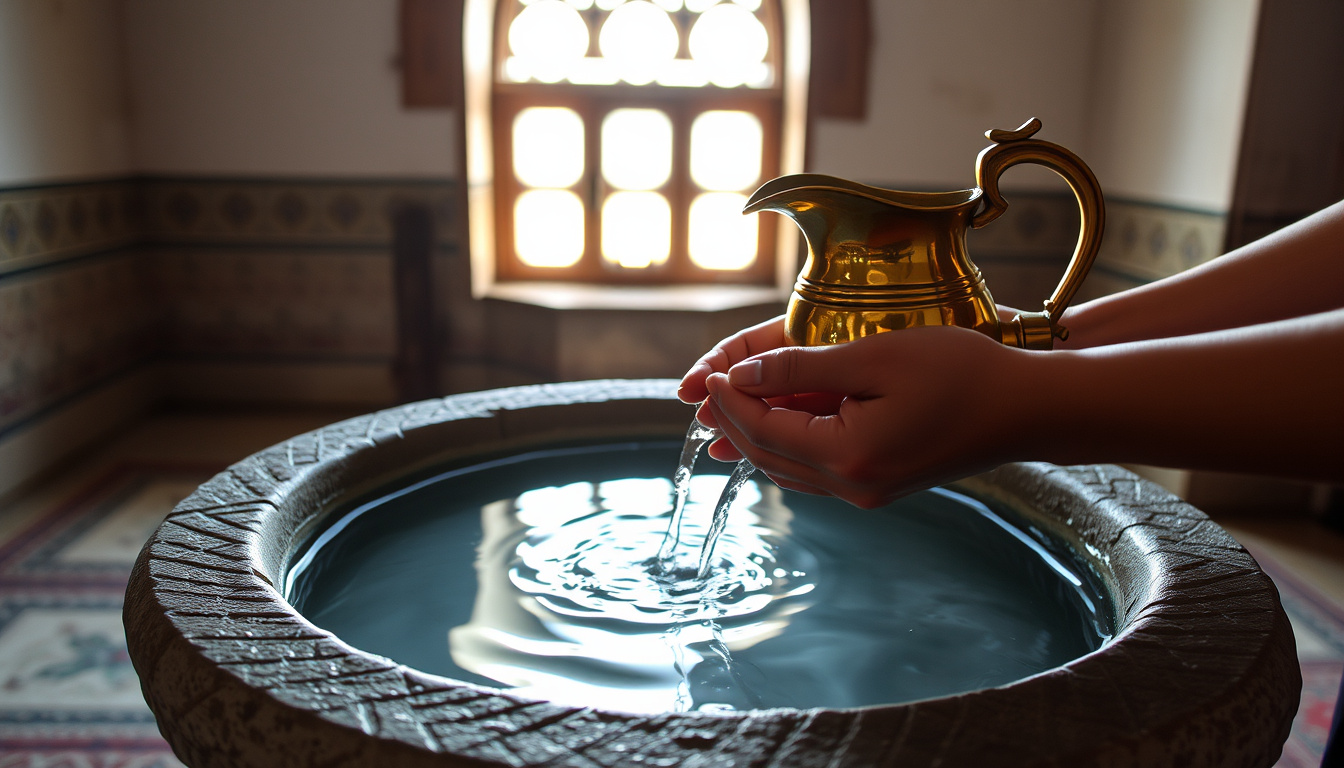
For many Muslims, wudu is such a routine part of daily life that the steps can feel automatic—almost second nature. But if you’re new to Islam or simply want to check your ablution matches the Sunnah, the details matter more than you might think, and this guide walks through the full sequence for both Sunni and Shia traditions with practical advice for women, travelers, and anyone navigating shorter forms of purification.
Obligatory acts of wudu (Quran 5:6): 4 (face, hands, head, feet) ·
Recommended number of washes per part: 3 times ·
Minimum steps for valid wudu: 5 (intention, wash face, wash hands, wipe head, wash feet) ·
Traditional order of washing: hands, mouth, nose, face, arms, head, ears, feet ·
Estimated time for a complete wudu: 2–3 minutes ·
Number of times the phrase ‘Bismillah’ is said: 1 at start
Quick snapshot
- Wash hands 3× (Masjid ar-Rahmah guide)
- Rinse mouth & nose 3× (Masjid ar-Rahmah guide)
- Wash face 3× (Masjid ar-Rahmah guide)
- Wash arms 3× (Masjid ar-Rahmah guide)
- Wipe head once (Masjid ar-Rahmah guide)
- Wash feet 3× (Masjid ar-Rahmah guide)
- Wash hands 2× (not 3) (Al-Islam.org guide)
- Wipe head with fingers wet (Al-Islam.org guide)
- Wash feet once (wiping optional after washing) (Al-Islam.org guide)
- Recite Bismillah before each step (Al-Islam.org guide)
- Intention + Bismillah (Masjid ar-Rahmah guide)
- Wash hands, mouth, nose, face, arms (Masjid ar-Rahmah guide)
- Wipe head, wash feet – each one time (Masjid ar-Rahmah guide)
- Valid for one prayer (instructional video)
Five key facts about wudu obligations and nullifiers, one pattern: the obligatory acts are the same across Sunni and Shia traditions, but the number of repetitions and the method for wiping differ.
| Label | Value |
|---|---|
| Obligatory acts per Quran 5:6 | 4: face, hands, head, feet (Quran.com) |
| Sunnah acts (recommended) | 8: Siwak, rinsing mouth, nose, washing ears, etc. |
| Number of nullifiers | Common: urination, defecation, wind, sleep, loss of consciousness (Sahih Muslim 263) |
| Wudu validity duration | No time limit; remains valid until a nullifier occurs |
| Age of accountability for wudu | Usually 7 years for teaching, 10 for enforcement |
How do you do wudu step by step?
-
Make the intention (Niyyah)
- Intention is internal, not verbal — you intend to purify yourself for prayer (Masjid ar-Rahmah guide).
- It does not require uttering any words aloud.
-
Say Bismillah
- Recite “Bismillah” once at the start of wudu.
- According to the Shia tradition, some repeat it before each step (Al-Islam.org).
-
Wash your hands three times
- Wash both hands up to the wrists, three times, ensuring water reaches between the fingers (instructional video).
- Start with the right hand in the Sunni tradition.
-
Rinse your mouth and clean your nose three times
- Take water into your mouth and swish it, then spit it out — three times. Using a miswak before rinsing is Sunnah.
- Inhale water gently into the nostrils, then blow it out — three times. Use the left hand to expel water from the nose.
-
Wash your face three times
- Wash from the forehead (hairline) to the chin, and from ear to ear (Masjid ar-Rahmah guide).
- Ensure water reaches all parts of the face.
-
Wash your arms up to the elbows three times
- Wash the right arm from the fingertips up to (and including) the elbows, then the left — three times each.
- In Shia practice, washing is from the elbow down to the fingertips (Al-Islam.org).
-
Wipe your head and ears (once or three times)
- In Sunni practice: wipe the head from the top of the forehead to the back and return to the forehead, once (Masjid ar-Rahmah guide).
- In Shia practice: wipe the front quarter of the head with the moisture remaining in the right hand (Al-Islam.org).
- Use the same water from wiping the head for the ears: index fingers clean the inside of the ears; thumbs clean behind them (Masjid ar-Rahmah guide).
- Some schools consider three fingers sufficient; others recommend a full hand.
-
Wash your feet up to the ankles three times
- Wash from the toes up to and including the ankles — three times, right foot first.
- Clean between the toes using the little finger (Masjid ar-Rahmah guide).
- In Shia practice, the feet are wiped (not washed) from the tip of the toes to the ankle joint (Al-Islam.org).
The pattern: The step-by-step sequence ensures all obligatory acts are covered, with schools differing only on repetitions and the wiping of head and feet.
How to perform wudu for females?
Does nail polish or makeup break wudu?
- Nail polish prevents water from reaching the nails, which invalidates wudu.
- Water-resistant makeup must be removed before wudu for it to be valid (women’s instructional video).
- Scholars advise removing all barriers before beginning ablution.
How to wipe over a head covering (khimar)?
- In some schools, women may wipe over their head covering if it is permissible in their tradition.
- Other schools require wiping the actual hair or skin.
Women face two practical barriers — nail polish and makeup — that are often overlooked in generic guides. The core issue is water reaching the skin; anything that blocks it invalidates wudu.
Is wudu valid with water-resistant cosmetics?
- Heavy makeup, waterproof mascara, and long-lasting foundations must be fully removed before wudu.
- Light, water-permeable cosmetics may be acceptable depending on the formulation.
Can pregnant women shorten wudu?
- No gender-specific differences exist in the obligatory acts of wudu.
- Pregnant women can use short wudu (once-per-part) if standing for long periods is difficult.
The takeaway: The only real differences are practical barriers, not changes in the ritual itself.
Can I kiss my wife after wudu?
Does kissing invalidate wudu?
- Kissing does not break wudu unless it results in an emission (madhy, mani) or wind.
- Scholars from the Hanafi school hold that touching skin of the spouse without desire does not break wudu, while the Shafi school considers any skin-to-skin contact between non-mahram (including spouses) as a nullifier (Sahih Bukhari 138).
What if kissing leads to breaking wind?
- Passing wind — whether from kissing or any other cause — invalidates wudu by consensus.
- The same applies to urination, defecation, and loss of consciousness.
Is wudu broken only if there is an emission?
- Most scholars agree that wudu remains valid after kissing if no emission (madhy or mani) occurs.
- Touching with sexual desire may invalidate wudu according to some schools (e.g., Shafi).
Can you kiss in Ramadan while in wudu?
- Kissing during Ramadan does not break wudu unless it leads to an emission, but it may affect the fast if it leads to arousal or swallowing saliva.
- The ruling on wudu remains separate from the fasting rules.
The disagreement between Hanafi and Shafi schools on this point is not trivial. A Shafi Muslim who kisses their spouse after wudu would need to repeat ablution; a Hanafi Muslim would not — same act, different rulings based on school methodology.
The consequence: Depending on your school, kissing may or may not break wudu — check your own madhhab’s ruling.
How to do short wudu?
What is the minimum number of washes?
- Each obligatory part must be washed at least once.
- Three times is recommended (Sunnah) but once is sufficient for validity (Masjid ar-Rahmah guide).
Can I wash each part only once?
- Yes — washing each part once fulfills the obligatory requirement.
- Short wudu does not omit any obligatory act; it only reduces the number of repetitions.
Is short wudu valid for every prayer?
- Yes, short wudu is valid for all prayers as long as no nullifier occurs between them.
- It is acceptable in cases of haste, necessity, or physical difficulty.
When is it allowed to skip recommended steps?
- Skipping Sunnah acts (like rinsing the mouth or wiping the ears) is permissible but reduces reward.
- Short wudu must still include all four obligatory acts from Quran 5:6.
The implication: For anyone who needs to shorten wudu, the minimum valid form still covers all Quranic obligations.
How to do wudu without water?
What is tayammum?
- Tayammum is dry purification using clean earth, sand, or stone when water is unavailable or harmful.
- It replaces wudu (or ghusl) as a temporary measure.
When is tayammum allowed?
- When no water is available within a reasonable distance.
- When using water would worsen an illness or injury.
- When water is reserved for drinking or essential needs.
How to perform tayammum step by step?
- Make the intention for tayammum.
- Strike both palms on clean earth, sand, or stone.
- Blow off excess dust.
- Wipe the face with the palms.
- Wipe the hands up to the wrists.
- One tayammum lasts for one obligatory (fard) prayer.
Does tayammum require intention?
- Yes — intention (niyyah) is a prerequisite for tayammum just as it is for wudu.
- Tayammum is invalidated by the same things that break wudu.
The takeaway: For those without water, tayammum provides a valid alternative that maintains ritual purity until water is found or the prayer time ends.
Confirmed facts
- Wudu is required before salah (Quran.com)
- Wudu is invalidated by passing wind, urination, and defecation (Sahih Muslim 263)
- The face includes from forehead to chin and ear to ear (Masjid ar-Rahmah guide)
- Hands up to elbows must be washed (Masjid ar-Rahmah guide)
- Feet up to ankles must be washed (Masjid ar-Rahmah guide)
What’s unclear
- Whether touching one’s spouse with desire breaks wudu (Hanafi: no; Shafi: yes)
- Whether wiping a small part of the head suffices (some say minimum is three fingers)
- Exact number of times for wiping the head across schools (once vs three times)
- Whether wiping the ears is obligatory or recommended — schools differ
- Whether the order of washing must be sequential without interruption (muwalat) is required in some schools
“O you who believe! When you rise up for prayer, wash your faces and your hands as far as the elbows, and wipe your heads, and wash your feet up to the ankles.”
— Quran 5:6 (Quran.com)
“The Prophet (peace be upon him) performed wudu washing each part three times.”
— Sahih Bukhari 138 (Sunnah.com)
“If a person sleeps, his wudu is broken because sleep causes the loss of consciousness, and the Prophet said that the eyes are the drawstring of the anus.”
— Sahih Muslim 263 (Sunnah.com)
“Nail polish prevents water from reaching the nails, so it must be removed before wudu. This is not a women’s issue — it is a barrier issue.”
— Shaykh Ibn Uthaymeen, as cited in fiqh lectures
The clarity across sources is that wudu has four obligatory acts — face, hands, head, and feet — and that nullifiers like urination, defecation, and wind are agreed upon. Where the schools diverge is on secondary questions: the number of head wipes, the effect of spousal touch, and whether feet should be washed or wiped. For Muslims practicing in daily life, the safest approach is to follow one school consistently and consult a trusted scholar on edge cases.
Readers interested in the practical steps will find a comprehensive step-by-step wudu guide for both traditions that carefully outlines each ritual according to the two major schools of thought.
Frequently asked questions
What breaks wudu?
Common nullifiers include urination, defecation, passing wind, deep sleep, loss of consciousness, and sexual discharge. Touching the private parts with bare hands also breaks wudu according to some schools.
What is the dua after wudu?
The recommended supplication is: “Ash-hadu an la ilaha illa-Allah, wahdahu la sharika lah, wa ash-hadu anna Muhammadan ‘abduhu wa rasuluh.” (I bear witness that there is no deity but Allah, alone without partner, and I bear witness that Muhammad is His servant and messenger.)
Do I need to remove nail polish before wudu?
Yes — nail polish creates a barrier that prevents water from reaching the nails. Wudu is invalid if any part of the obligatory area remains dry.
Can I perform wudu with contact lenses?
Yes — contact lenses do not prevent water from reaching the eyes, and the eyes are not part of the obligatory wash. Wiping the eyelids is not required in wudu.
Is wudu valid if I have a bandage on my foot?
Yes — you may wipe over the bandage (masah ala al-jabirah) instead of washing the affected area. This is a recognized concession in Islamic jurisprudence.
How long does wudu last?
Wudu has no time limit. It remains valid until a nullifier occurs, whether that is five minutes or five hours.
Can I pray with the same wudu for multiple prayers if I haven’t broken it?
Yes — one wudu is valid for multiple obligatory and voluntary prayers as long as no nullifier has occurred. The Prophet (peace be upon him) prayed multiple prayers with a single wudu on several occasions.

Oliver William Davies Thompson is a staff writer for MetroReport.uk, covering city news, transport, housing and urban policy. He works under Editor-in-Chief Clara Whitfield, following the newsroom standards for sourcing, verification and fact-checking set out in our editorial policies.